








What's Happening?
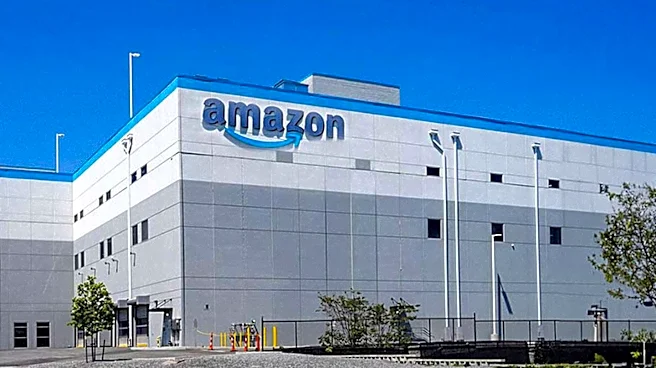
U.S. technology companies, including Amazon, Microsoft, and Meta, are increasingly entering into long-term power purchase agreements (PPAs) for nuclear energy to meet the escalating electricity demands of their AI data centers. Amazon recently signed
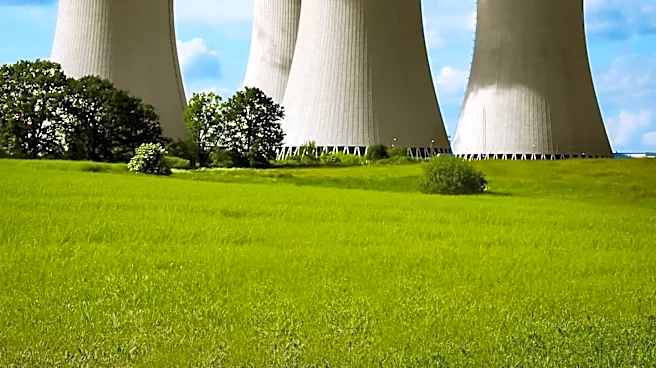
a 20-year contract with Constellation, a U.S. nuclear power company, to purchase 690 megawatts (MW) from the Calvert Cliffs nuclear power plant in Maryland. This agreement includes a plan to increase the plant's output by 190 MW between 2030 and 2032, with Constellation investing over $3 billion in facility improvements based on Amazon's commitment. Similarly, Microsoft has a 20-year PPA with Constellation to supply 835 MW by restarting Unit 1 of the Three Mile Island nuclear plant by 2027. Meta also agreed last year to purchase 1.1 gigawatts (GW) of power from the Clinton nuclear plant in Illinois for two decades and plans to support the development of next-generation reactors to secure up to 6.6 GW by 2035. Google has partnered with Kairos Power, a developer of small modular reactors (SMRs), aiming for up to 500 MW by 2035. This trend highlights a strategic shift by tech giants to secure stable and reliable power sources for their energy-intensive AI operations.
Why It's Important?
The aggressive pursuit of nuclear power by major U.S. tech companies signifies a critical response to the unprecedented electricity demands of artificial intelligence data centers. The International Energy Agency (IEA) projects global data center electricity consumption to more than double from 415 terawatt-hours (TWh) in 2024 to approximately 950 TWh in 2030, with U.S. consumption alone surging from about 180 TWh to 420 TWh in the same period. This demand surpasses the combined electricity usage of energy-intensive industries like steel and aluminum. Traditional renewable sources like solar and wind, while clean, are intermittent and cannot provide the continuous, stable power required by data centers that operate non-stop. Nuclear power, with its consistent output, offers a reliable solution, making it increasingly attractive. This shift has significant implications for the U.S. energy sector, potentially driving substantial investment in nuclear infrastructure, including the revival of dormant plants and the development of advanced reactor technologies. It also underscores the growing energy footprint of the digital economy and the challenges of powering it sustainably, impacting energy policy, grid stability, and the long-term energy mix of the nation.
What's Next?
The trend of U.S. tech giants investing in nuclear power is expected to continue and expand, leading to further long-term power purchase agreements and direct investments in nuclear energy infrastructure. Constellation, for instance, plans to invest over $3 billion in facility improvements and output augmentation at the Calvert Cliffs plant, driven by Amazon's commitment. This indicates a potential wave of similar investments across the nuclear sector. The focus will likely broaden to include the development and deployment of next-generation reactors, such as small modular reactors (SMRs), as Meta and Google are already exploring. This could accelerate the commercialization of these advanced nuclear technologies. Regulatory bodies will face increasing pressure to streamline licensing and approval processes for nuclear projects to meet the urgent demand. Furthermore, the energy market will likely see increased competition for stable power sources, potentially influencing electricity prices and grid development strategies. The success of these partnerships could also serve as a model for other industries with high, continuous power needs, further solidifying nuclear power's role in the U.S. energy landscape.
Beyond the Headlines
The pivot by U.S. tech giants towards nuclear power for their AI data centers carries profound implications beyond immediate energy supply. Ethically, it raises questions about the long-term management of nuclear waste and the safety protocols for expanding nuclear energy infrastructure, especially in the context of restarting older plants. Legally, these long-term PPAs and investments could necessitate new regulatory frameworks and incentives to support nuclear development, potentially influencing federal and state energy policies. Culturally, it could shift public perception of nuclear energy, moving it from a controversial power source to a critical component of a high-tech, AI-driven future. This development also highlights a broader societal challenge: balancing technological advancement with environmental sustainability. While nuclear power offers a carbon-free, stable energy source, its associated risks and costs remain significant. The long-term shift could trigger a renaissance in nuclear engineering and research, fostering innovation in reactor design and fuel cycle technologies. Ultimately, the decisions made today regarding nuclear power and AI infrastructure will shape the U.S.'s energy independence, technological leadership, and environmental legacy for decades to come.