
What's Happening?
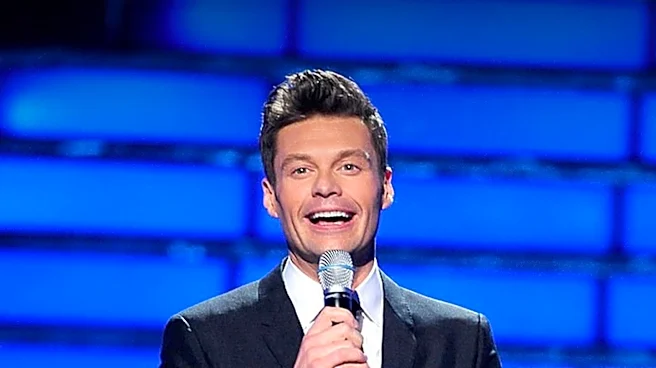
Ryan Seacrest recently revealed his preference for hanging out with men who are proud of their arms, often showcasing his own muscles. This discussion took place on his radio show, 'On Air With Ryan Seacrest,' where co-host Tanya Rad playfully called
him out for not wearing a tank top as promised. Seacrest, in response, unbuttoned his shirt to reveal a ribbed tank top underneath, explaining its practicality for hot weather. He further elaborated on his appreciation for sleeveless shirts, stating, 'Dudes, if you don't wear sleeveless shirts, I understand why, but try it. It kind of feels great.' He concluded by expressing a desire to connect with others who share this preference, saying, 'For those of you who do, I get you. I see you. I am you. I wanna hang out with you.' This on-air moment highlighted Seacrest's casual style and personal preferences, which he also shares on social media, including a recent Instagram post featuring him in a similar white tank top.
Why It's Important?
This seemingly lighthearted discussion offers a glimpse into the evolving landscape of celebrity authenticity and personal branding in the U.S. entertainment industry. For public figures like Ryan Seacrest, who maintain a significant presence across various media platforms, sharing personal preferences and casual moments can foster a deeper connection with their audience. This approach can enhance relatability and humanize celebrities, moving beyond their polished public personas. The emphasis on comfort and practicality in fashion, as highlighted by Seacrest's choice of ribbed tank tops, also reflects broader trends in consumer behavior, where functionality and personal expression are increasingly valued over strict adherence to traditional fashion norms. This can influence fashion trends and consumer choices, particularly among his fan base, potentially boosting the popularity of casual wear. Furthermore, Seacrest's openness about his social preferences contributes to a more inclusive dialogue around male body image and self-expression, subtly challenging conventional masculinity norms within mainstream media.
What's Next?
Following this public discussion, it is likely that Ryan Seacrest will continue to integrate aspects of his personal life and preferences into his public persona, particularly through his radio show and social media channels. This could lead to more casual fashion choices being showcased, potentially influencing trends among his followers and the broader public. Brands specializing in comfortable, practical attire might see an opportunity to collaborate with Seacrest, leveraging his influence to promote their products. His continued emphasis on authenticity and relatability could also encourage other public figures to share more personal insights, further blurring the lines between celebrity and everyday life. Additionally, the ongoing conversation around male body image and self-expression, sparked by Seacrest's comments, may see further engagement from his audience and other media personalities, contributing to a more open dialogue on these topics within U.S. society.
Beyond the Headlines
Beyond the immediate entertainment value, Seacrest's comments touch upon deeper cultural shifts regarding masculinity and self-presentation in the public eye. His comfort in discussing his physique and preferred attire, even playfully, challenges traditional expectations of male celebrity, which often lean towards more formal or overtly masculine portrayals. This contributes to a broader societal trend where individuals, regardless of gender, are increasingly encouraged to embrace and express their authentic selves. The casual nature of his revelation also underscores the power of radio and social media as platforms for intimate, unscripted interactions, contrasting with the more curated environments of television. This shift towards authenticity can have long-term implications for how celebrities engage with their audiences, potentially leading to more transparent and relatable public figures. It also highlights the subtle ways in which media personalities can influence cultural norms and perceptions around body image and personal style, fostering a more accepting environment for diverse forms of self-expression.