






What's Happening?
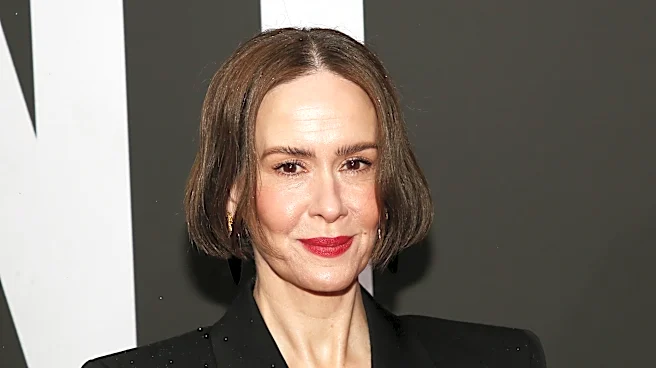
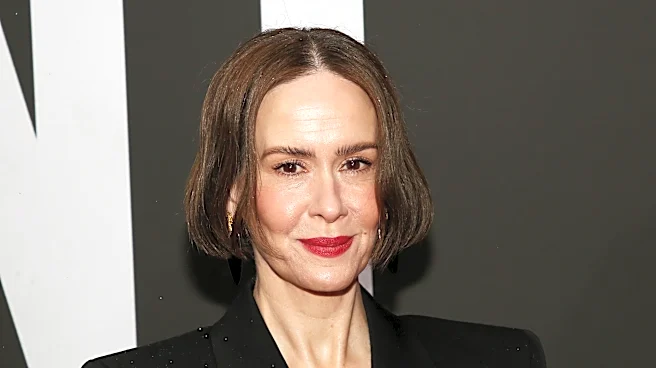
Actress Sarah Paulson recently offered insights into her relationship with longtime partner Holland Taylor during an appearance on Chelsea Handler's 'Dear Chelsea' podcast. Paulson revealed that Taylor has accused her of having a 'superiority problem'
and speaking down to her during disagreements, believing her own perspective to be the only correct one. Paulson acknowledged this tendency, admitting she can be quick to anger but is typically the first to seek reconciliation after an argument. She described her own emotional responses as often 'hot real fast' and 'outside-of-my-body,' contrasting them with Taylor's more 'pragmatic' and 'even-keeled' approach. Paulson expressed admiration for Taylor's patience and level-headedness, stating she aspires to be more like her partner. The couple, who began dating in 2015, maintains independence within their relationship, partly due to their busy work schedules which provide 'built-in separations.' Despite having no plans to marry, Paulson affirmed her deep commitment to Taylor.
Why It's Important?
This candid discussion from a prominent Hollywood figure like Sarah Paulson provides a relatable glimpse into the complexities of long-term relationships, particularly for those in the public eye. Her openness about personal struggles with temperament and communication can resonate with many individuals facing similar challenges in their own partnerships. The dynamic described, where one partner is more emotionally reactive and the other more composed, is a common theme in relationships, making Paulson's insights valuable for understanding interpersonal dynamics. Furthermore, the couple's decision to remain unmarried while expressing deep commitment challenges traditional societal norms around relationships and marriage, offering a different perspective on what constitutes a strong and lasting bond. Their ability to navigate differing personalities and maintain independence while remaining connected can serve as a model for others seeking to build resilient relationships.
What's Next?
While the interview primarily focused on past and present relationship dynamics, Paulson's public reflection on her temperament and aspirations to emulate Taylor's patience suggests a continued personal journey towards self-improvement in her interactions. This ongoing self-awareness could lead to further discussions or reflections from Paulson on her personal growth. For the couple, their established pattern of maintaining independence through work schedules and their mutual commitment, despite not planning marriage, indicates a stable and self-defined future for their relationship. The public's reception of such candid celebrity discussions often encourages broader conversations about relationship health and communication strategies, potentially influencing how others approach their own partnerships.
Beyond the Headlines
Paulson's admission of a 'superiority problem' and her tendency to be 'black and white' in her thinking, contrasted with Taylor's 'myriad of gray' perspective, highlights a fundamental aspect of human psychology: cognitive biases and differing communication styles. This dynamic extends beyond personal relationships into professional and societal interactions, where rigid thinking can hinder understanding and compromise. The interview subtly touches upon the ethical dimension of self-awareness and the continuous effort required to overcome ingrained behavioral patterns for healthier relationships. It also underscores the cultural shift towards recognizing diverse forms of committed partnerships, moving beyond conventional marital expectations. The public nature of Paulson's confession could encourage a more open dialogue about personal flaws and the pursuit of emotional intelligence in a society often focused on curated public images.