






What's Happening?
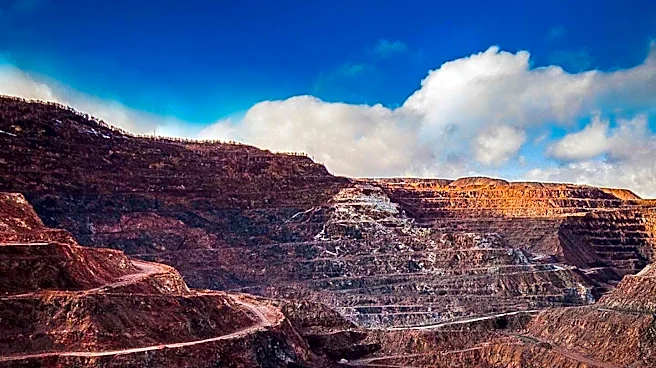
Morocco's Ministry of Energy and Mines has renewed two exploration licenses for Talisman Metals' Fougnar project, extending them for another four years until 2030. The Fougnar Project, held entirely by Talisman through a Moroccan subsidiary, covers 30.6
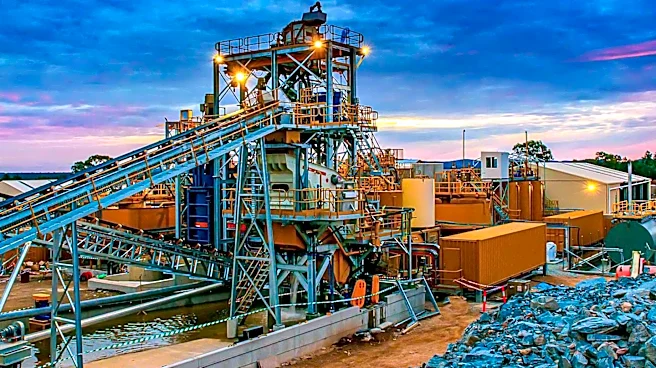
square kilometers. This project is focused on exploring approximately 8 kilometers of strike length where known copper occurrences exist across at least two stratigraphic levels. Previous channel samples from the site have shown promising results, with grades ranging from 0.50% to 1.45% copper and up to 70 grams per ton of silver. The Fougnar project is categorized as a sediment-hosted stratiform copper system. The Dublin-based mining company, Talisman Metals, has announced plans to initiate a drilling campaign at the Fougnar Project during the fourth quarter of 2026. The site is strategically located about 25 kilometers from the Tizert copper-silver deposit, which is currently operated by the Managem Group. The Tizert deposit itself boasts a measured and indicated mineral resource of 76 million tons, with an average grade of 0.8% copper and 17 grams per ton of silver, processing 4 million tons of material annually.
Why It's Important?
The renewal of Talisman Metals' Fougnar licenses signifies continued investment and confidence in Morocco's mining sector, particularly for copper and silver exploration. This development is important for the U.S. as it contributes to the global supply chain of critical minerals, which are essential for various industries including electronics, renewable energy technologies, and manufacturing. Increased exploration and potential extraction of these minerals can help diversify sources and reduce reliance on a few dominant producers, thereby enhancing supply chain resilience. For U.S. businesses involved in mineral processing, trading, or technology development that utilizes copper and silver, this could mean more stable and potentially more affordable access to raw materials. The proximity to the established Tizert deposit suggests a region with significant mineral potential, which could attract further international investment and collaboration, indirectly benefiting U.S. companies seeking to expand their global footprint or secure long-term mineral supplies. The success of such projects can also influence global commodity prices, impacting U.S. industries that are major consumers of these metals.
What's Next?
Talisman Metals is scheduled to commence a drilling campaign at the Fougnar Project in the fourth quarter of 2026. The results of this drilling campaign will be crucial in determining the economic viability and scale of the copper and silver deposits. Successful drilling could lead to further investment in resource delineation and the eventual development of a mine, potentially increasing Morocco's output of these critical minerals. This could also encourage other international mining companies, including those from the U.S., to explore similar opportunities in the region. The ongoing exploration and potential development will be closely monitored by the global mining community and commodity markets. Future steps will likely involve detailed feasibility studies, environmental impact assessments, and securing additional financing if the drilling results are positive. The Moroccan government will continue to play a role in regulating these activities and ensuring compliance with mining laws and environmental standards.
Beyond the Headlines
The renewal of these mining licenses extends beyond immediate economic implications, touching upon broader geopolitical and environmental considerations. For the U.S., securing diverse sources of critical minerals like copper and silver is a strategic imperative, especially in an era of increasing global competition and supply chain vulnerabilities. This project in Morocco could contribute to a more diversified and stable supply, reducing potential dependencies on less reliable regions. Environmentally, the development of new mining projects always raises concerns about sustainable practices and ecological impact. The classification of Fougnar as a sediment-hosted stratiform copper system suggests a particular geological context that might influence extraction methods and environmental mitigation strategies. The long-term success of such projects will depend not only on the quantity and quality of minerals but also on adherence to international best practices in environmental management and social responsibility, which are increasingly important for U.S. and international investors. This also highlights the growing importance of North Africa as a region for mineral resource development.