




What's Happening?
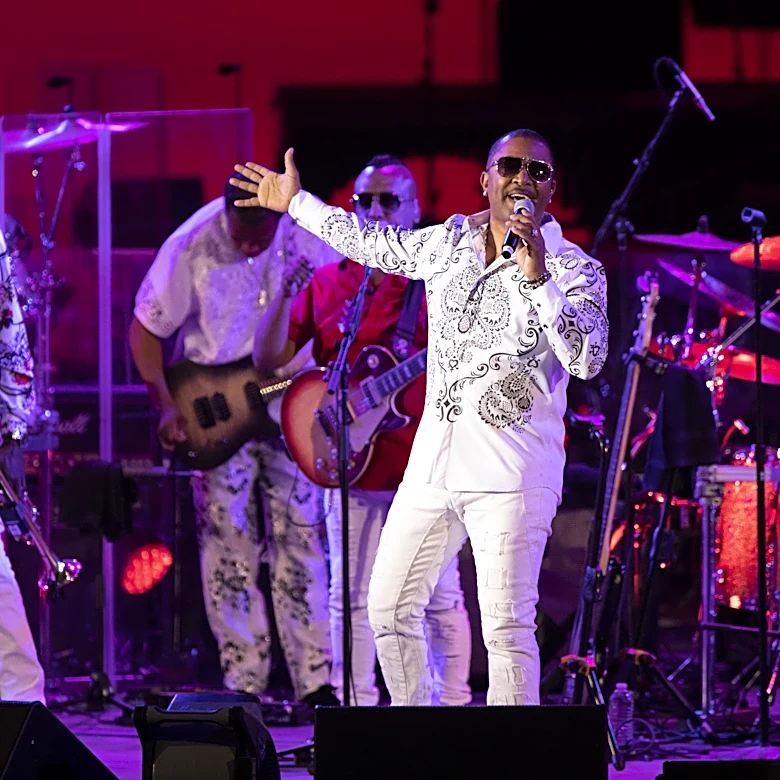
The Philippines, represented by CARMELLE with her song "Sobra-Sobra," has won the first-ever Eurovision Song Contest Asia. The grand finale, held in Bangkok, saw CARMELLE secure the highest scores from both national juries and public votes, narrowly beating
Thailand's MANG X DAOU. The event featured musical acts from 11 Asian countries, including Bangladesh, Bhutan, Cambodia, Laos, Malaysia, Mongolia, Nepal, South Korea, Thailand, and Vietnam. The competition followed the established Eurovision voting format, with national juries and public votes each accounting for 50% of the final result. Viewers worldwide could also cast votes through the "Rest of the World" category. This inaugural Asian edition took place amidst ongoing controversy surrounding Israel's participation in the traditional Eurovision Song Contest, with critics advocating for its exclusion due to human rights concerns and military actions in Gaza, drawing parallels to Russia's ban in 2022.
Why It's Important?
The launch of Eurovision Asia signifies a significant expansion of the popular song contest format into a new and diverse regional market. This event provides a substantial platform for Asian artists to gain international recognition and fosters cultural exchange across participating nations. For the Philippines, CARMELLE's victory elevates its music industry on a global stage, potentially opening new avenues for its artists and cultural exports. The success of Eurovision Asia could lead to increased investment in regional music production and talent development. Concurrently, the controversy surrounding Israel's involvement in the European Eurovision highlights the increasing intersection of global political events and cultural platforms, posing challenges for organizers to balance artistic expression with geopolitical sensitivities. This dynamic could influence future participation rules and public perception of such international events.
What's Next?
Following the successful debut, it is likely that Eurovision Asia will become an annual event, potentially expanding to include more participating countries in future editions. The format's success could encourage other regions to adopt similar contests, further globalizing the Eurovision brand. Organizers will likely assess the inaugural event's reception and make adjustments for future iterations, potentially refining voting mechanisms or participant selection processes. For the traditional Eurovision Song Contest, the debate over Israel's participation is expected to continue, potentially leading to ongoing discussions about the criteria for country involvement, especially in light of international conflicts. This could prompt organizers to re-evaluate their policies regarding political neutrality and human rights considerations for all participating nations.
Beyond the Headlines
The establishment of Eurovision Asia reflects a broader trend of regionalizing global cultural phenomena, adapting successful Western formats to diverse local contexts. This not only caters to regional audiences but also taps into new markets for entertainment industries. The simultaneous political controversy surrounding the European Eurovision underscores the growing expectation for international cultural events to take stances on global ethical and political issues, moving beyond a purely entertainment-focused role. This pressure can lead to complex dilemmas for organizers, who must navigate between maintaining broad appeal and responding to calls for social and political accountability. The precedent set by Russia's ban in 2022 continues to be a benchmark for activists advocating for similar actions against other nations, indicating a shift in how international cultural platforms are perceived and utilized as arenas for social and political commentary.