






What's Happening?
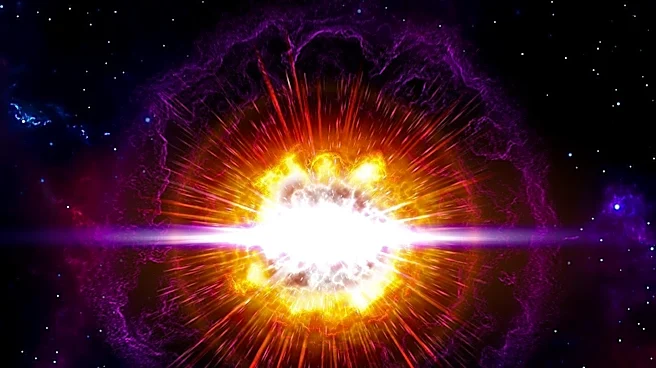
Claire North's sci-fi novel 'Slow Gods' explores the existential crisis faced by a civilization aware of an impending supernova that will destroy their planet in 100 years. The narrative delves into the societal and ethical dilemmas of preparing for such
a catastrophe, including the challenges of evacuating billions of people, deciding who gets saved, and preserving cultural identity. The story raises questions about the choices made in the face of inevitable destruction and the moral implications of those decisions.
Why It's Important?
The novel's exploration of a civilization's response to a supernova threat serves as a metaphor for real-world challenges, such as climate change and resource scarcity. It highlights the difficulties in mobilizing collective action for long-term threats and the ethical considerations in prioritizing survival. The story prompts reflection on how societies allocate resources and make decisions that affect future generations, emphasizing the importance of proactive planning and equitable solutions in the face of global crises.
What's Next?
As the narrative unfolds, the civilization in 'Slow Gods' must confront the limitations of their evacuation efforts and the societal tensions that arise from selective survival strategies. The story suggests potential outcomes, such as societal fragmentation and conflict over limited resources, mirroring real-world scenarios where nations grapple with similar issues. The novel invites readers to consider the consequences of inaction and the need for innovative solutions to ensure the survival and continuity of human civilization.
Beyond the Headlines
Beyond its immediate plot, 'Slow Gods' offers a commentary on the human condition and the resilience required to face existential threats. It challenges readers to think about the legacy they leave behind and the values that guide their decisions in times of crisis. The novel underscores the importance of preserving cultural heritage and identity, even as societies undergo transformative changes in response to external pressures.