






What's Happening?
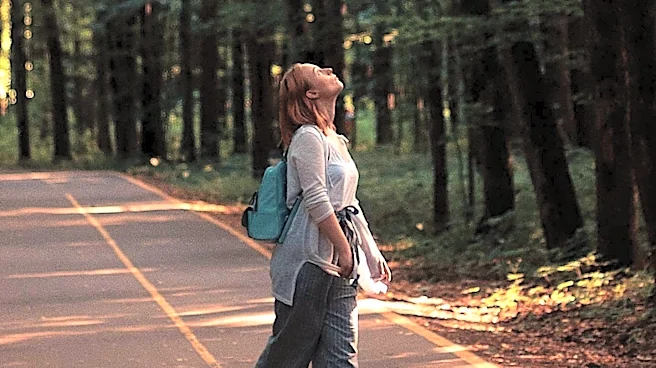
Shinrin-Yoku, commonly known as 'forest bathing,' is a Japanese practice introduced by the Japan Forestry Agency in 1982 to foster a deeper connection between people and forests. The practice involves immersing oneself in the atmosphere of a forest, focusing
on sensory experiences like sights, sounds, and smells, rather than engaging in strenuous exercise or reaching a specific destination. It emphasizes slowing down and consciously experiencing the natural environment. While originating in Japan, Shinrin-Yoku has spread globally, with its core principle being a conscious connection with nature, which can be practiced in any suitable natural setting like a forest, grove, or densely wooded park. The practice encourages individuals to put away digital devices, move slowly, and engage all five senses to observe their surroundings.
Why It's Important?
The growing popularity of Shinrin-Yoku highlights a global trend towards seeking natural remedies for the stresses of modern life. In the U.S., where urban living and technology often dominate daily routines, practices like forest bathing offer a valuable approach to mental and physical well-being. Research, including field studies in Japan, suggests that forest environments can lead to positive changes in stress indicators and physiological relaxation compared to urban settings. A 2026 systematic review and meta-analysis indicated that Shinrin-Yoku practices were associated with reduced heart rate and improvements in psychological measures like tension and anxiety. This practice offers a low-cost, accessible method for individuals to potentially improve their health and reduce stress, contributing to a broader public health discussion on the benefits of nature exposure.
What's Next?
As awareness of Shinrin-Yoku grows, it is likely to see increased adoption and integration into wellness programs and public health initiatives in the U.S. Further scientific research is anticipated to explore its long-term benefits and mechanisms, particularly regarding its impact on stress hormones and immune function. The practice may also influence urban planning and conservation efforts, encouraging the preservation and creation of accessible green spaces for public well-being. Educational programs and guided forest bathing experiences could become more prevalent, offering structured ways for people to engage with this practice. The emphasis on conscious connection with nature could also inspire broader shifts in lifestyle choices, promoting more time outdoors and a greater appreciation for environmental conservation.
Beyond the Headlines
The rise of Shinrin-Yoku reflects a deeper societal yearning for disconnection from the digital world and a re-engagement with fundamental human needs for nature. It challenges the prevailing notion that well-being must be achieved through complex, technology-driven solutions, instead advocating for simplicity and mindfulness. This practice also underscores the cultural significance of nature in Japanese tradition, where elements like mountains and trees hold spiritual importance. Its global adoption suggests a universal human need for natural environments, potentially leading to a re-evaluation of how urban spaces are designed and how individuals prioritize their mental and physical health. The ethical implications include ensuring equitable access to natural spaces for all communities, regardless of socioeconomic status, to fully realize the benefits of such practices.