







What's Happening?
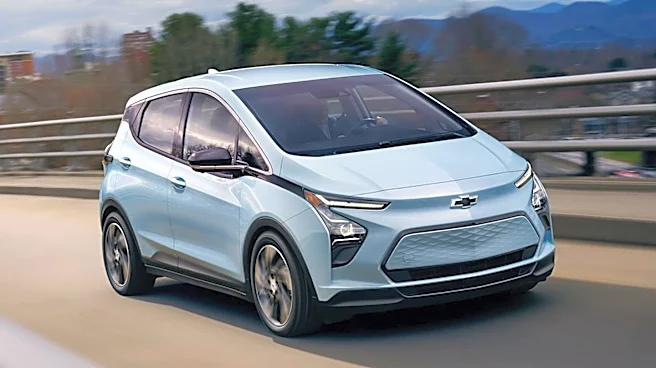
Chevrolet has reintroduced the 2027 Bolt electric vehicle with a starting MSRP of $28,995 for the LT trim, making it one of the most affordable new EVs in the U.S. market. The vehicle's official page and various automotive news outlets, including CBT
News and CarGurus, confirm this pricing, which includes a $1,395 destination charge. The Bolt LT offers an EPA-estimated range of 262 miles, powered by a 65 kWh lithium-iron-phosphate (LFP) battery. A higher RS trim is also available at $32,995. This relaunch positions the Bolt as a significant contender in the sub-$40,000 EV segment, with several sources noting it as the cheapest new EV in their respective rankings. The car's return is framed as a comeback for an affordable electric option, with improved efficiency compared to its predecessor, delivering more range from the same battery capacity.
Why It's Important?
The reintroduction of the Chevrolet Bolt at a sub-$30,000 price point is a pivotal development for the U.S. electric vehicle market. For years, the $35,000 mark was considered the entry-level for mainstream EVs with practical range. The Bolt's aggressive pricing shifts this benchmark, potentially accelerating EV adoption by making electric mobility more accessible to a broader consumer base. This move puts significant pressure on competitors like the Kia EV3 and Nissan Leaf, which are priced slightly higher, to adjust their strategies through incentives or pricing. Furthermore, it creates an internal dynamic for Chevrolet, as the Bolt now offers a more budget-friendly alternative to the Equinox EV, potentially drawing buyers who prioritize cost over size. The use of LFP battery chemistry in the Bolt also signals a broader industry trend towards more cost-effective battery technologies, which could lead to further price reductions across the EV market.
What's Next?
In the coming months, it is anticipated that rival EV manufacturers will respond to the Bolt's competitive pricing, likely through increased incentives or lease deals rather than direct list-price cuts, particularly for models like the Nissan Leaf and Kia EV3. Chevrolet will face pressure to release official DC fast-charging figures for the Bolt, as this remains an unconfirmed specification that is crucial for potential buyers planning longer trips. The landscape of EVs under $40,000 is expected to continue shifting as 2027 model-year prices are released, leading to variations in how different outlets rank and count affordable EV options. Internally, Chevrolet may re-evaluate the positioning of its Equinox EV to maintain a clear market distinction from the more affordable Bolt, possibly through trim adjustments or package offerings. The resolution of the Bolt's eligibility for federal clean-vehicle tax credits will also significantly influence its effective price and market appeal.
Beyond the Headlines
The re-entry of the Chevrolet Bolt at a highly competitive price point could trigger a fundamental shift in consumer perception of electric vehicles, moving them from a premium or niche product to a more mainstream and economically viable option. This development challenges the long-held notion that EVs are inherently expensive, potentially normalizing electric car ownership for a wider demographic. The emphasis on affordability, coupled with a respectable range, could also influence urban planning and infrastructure development, as more accessible EVs might necessitate an expansion of public charging networks, especially in areas where home charging is not feasible. Ethically, this move could be seen as a step towards democratizing sustainable transportation, making eco-friendly choices available to a broader segment of the population. The long-term cultural impact could be a faster transition away from internal combustion engine vehicles, driven by economic practicality rather than solely environmental consciousness.