





What's Happening?
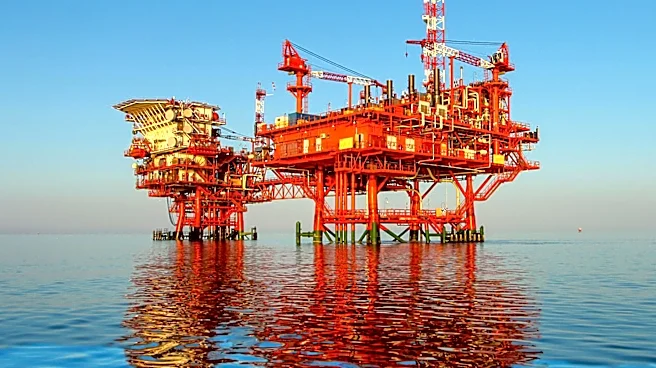
Palmer Luckey, known for founding Oculus and the arms manufacturer Anduril, is exploring the development of 'seasteads'—offshore platforms designed to operate free from U.S. state and local government regulations. These seasteads are explicitly intended
to strengthen America by serving as a 'relief valve' for what Luckey considers ill-considered or outdated rules. This concept aligns with a historical American impulse for expansion and the idea of new frontiers providing opportunities for societal renewal. The project, referred to as 'SLAB' in other contexts, aims to facilitate industrial and medical research activities that might face significant regulatory hurdles on land. Luckey's initiative reflects a broader sentiment among some technologists who believe that excessive regulation stifles innovation and progress, advocating for new spaces where different operational paradigms can be tested.
Why It's Important?
The exploration of 'seasteads' by figures like Palmer Luckey carries significant implications for U.S. governance, industry, and the concept of national expansion. If successful, these offshore platforms could create new economic zones with distinct regulatory environments, potentially attracting businesses and research initiatives seeking greater operational freedom. This could lead to a competitive advantage for certain U.S. industries by reducing compliance costs and accelerating development cycles. However, it also raises complex questions about legal jurisdiction, environmental protection, labor standards, and the potential for regulatory arbitrage. The initiative challenges the traditional boundaries of national sovereignty and could spark debates about the role of government in fostering innovation versus ensuring public welfare. For U.S. policymakers, it presents a novel challenge in balancing economic growth with regulatory oversight and international legal obligations.
What's Next?
The concept of 'seasteads' is still in its exploratory phase, and significant legal, logistical, and financial hurdles remain before such platforms could become operational. Future developments will likely involve detailed feasibility studies, engagement with international maritime law experts, and potential discussions with U.S. federal authorities regarding jurisdiction and oversight. The success of these ventures will depend on their ability to navigate complex legal frameworks and gain acceptance from various stakeholders, including environmental groups and international bodies. The ongoing debate about the balance between innovation and regulation will likely intensify as these concepts gain traction, potentially leading to new policy proposals or legal precedents concerning offshore autonomous zones. The broader implications for U.S. expansionist ideals, as highlighted by the source, suggest that these projects are part of a larger cultural and political movement.
Beyond the Headlines
The idea of 'seasteads' represents a modern manifestation of the American frontier thesis, where expansion into new territories—in this case, the ocean—is seen as a means to escape existing constraints and foster societal renewal. This perspective suggests that innovation and progress are best achieved by creating spaces free from established governmental and regulatory structures. However, this approach also raises fundamental questions about the nature of governance and the social contract. Critics might argue that such ventures could lead to a 'race to the bottom' in terms of environmental and labor standards, creating havens for activities that might be deemed undesirable or unethical under existing laws. The long-term impact could be a fragmentation of regulatory authority and the emergence of new forms of sovereignty, challenging the traditional nation-state model and potentially exacerbating global inequalities. It underscores a tension between libertarian ideals of freedom and the collective responsibility for public goods and global commons.