






What's Happening?
The Federal Reserve has decided to keep its key interest rate unchanged, despite nearly half of its policymakers indicating support for a potential rate hike later this year. This decision comes amid persistent inflation, which has reached a three-year
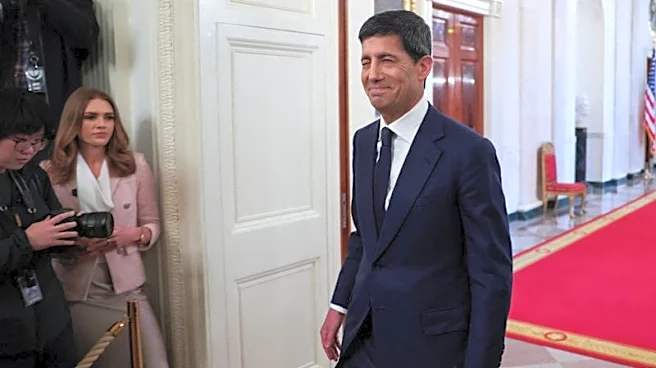
high of 4.2%, largely driven by increased gas prices due to the ongoing conflict in the Middle East. The Fed, under the leadership of Chairman Kevin Warsh, has shifted its communication strategy by removing forward guidance and long statements, reflecting a more cautious approach to economic projections. Warsh, appointed by President Trump, faces the challenge of balancing inflation control with the administration's preference for lower rates. The Fed's decision to maintain the rate at approximately 3.6% comes as inflationary pressures continue, with prices of various goods and services rising even before the conflict. The central bank's commitment to price stability remains firm, as it navigates the complexities of the current economic environment.
Why It's Important?
The Federal Reserve's decision to potentially raise interest rates later this year highlights the ongoing struggle to manage inflation, which has exceeded the Fed's 2% target for five years. This situation poses significant implications for the U.S. economy, particularly as higher interest rates could increase borrowing costs for consumers and businesses, affecting mortgages, auto loans, and other credit forms. The decision also reflects the Fed's attempt to address inflationary pressures while considering the political landscape, as President Trump has advocated for lower rates. The potential rate hike could impact economic growth and consumer spending, especially with the midterm elections approaching. Additionally, the Fed's new communication strategy under Warsh aims to provide clearer guidance to financial markets, which could influence investor confidence and market stability.
What's Next?
If the conflict in the Middle East is resolved, a decline in gas prices could lead to a cooling of inflation in the coming months. However, the Fed's consideration of a rate hike suggests that inflationary pressures may persist, requiring continued vigilance. The central bank's future actions will likely depend on economic data, including employment figures and inflation trends. As the Fed forms task forces to improve its communication and data analysis, stakeholders will closely monitor these developments. The potential for higher rates could provoke reactions from political leaders and economic stakeholders, influencing policy decisions and market dynamics. The Fed's approach to managing inflation and interest rates will remain a critical focus as it seeks to balance economic stability with growth objectives.