
What's Happening?
The U.S. Trade Representative's office is reportedly preparing to release findings from a probe into major U.S. trading partners, including the European Union and China, concerning evidence of excess industrial
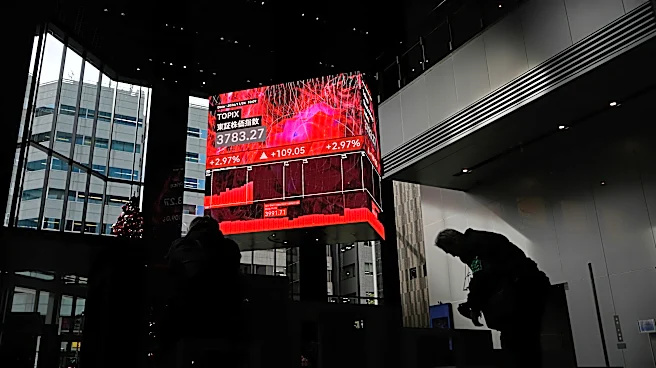
capacity. Sources familiar with the matter indicate that these findings are imminent, potentially leading to the imposition of additional tariffs. The anticipation of this report, associated with U.S. Trade Representative Jamieson Greer, has already triggered significant market reactions, with global markets experiencing sell-offs. Asian-Pacific shares, including those in Korea, Taiwan, and Japan, have seen substantial declines, with some experiencing their worst one-day performance since President Trump's tariff announcement in April 2025. Commodity markets, including Brent crude and copper, have also slipped, reflecting broader concerns about growth expectations amidst potential trade escalations.
Why It's Important?
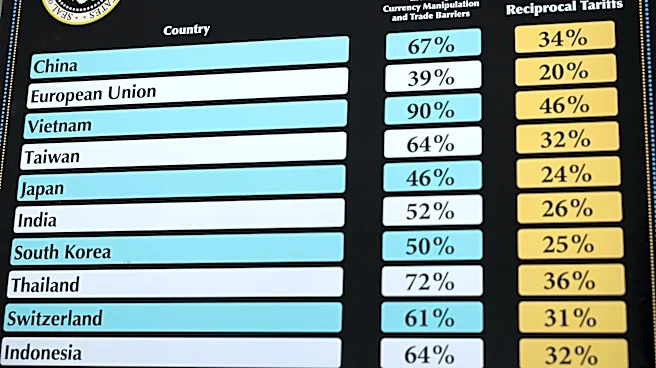
The impending release of the USTR's findings and the potential for new tariffs carry significant implications for global trade and economic stability. Increased tariffs on goods from major trading partners like the EU and China could disrupt international supply chains, raise costs for consumers and businesses, and potentially slow global economic growth. For U.S. industries, while some might see protection from foreign competition, others reliant on imported components or exporting to these markets could face adverse effects. The market's immediate negative reaction underscores investor anxiety regarding trade uncertainty and its impact on corporate earnings and economic forecasts. This development highlights the U.S. administration's continued focus on addressing perceived unfair trade practices, particularly concerning industrial overcapacity, which it views as distorting global markets.
What's Next?
The immediate next step is the release of the USTR's probe findings, which will detail the specific concerns regarding excess industrial capacity in key trading partners. Following this, the U.S. government may announce new tariff measures or other trade remedies. This could trigger retaliatory actions from affected countries, potentially escalating trade disputes. Businesses with international supply chains and those engaged in import/export activities will need to quickly assess the implications of any new tariffs on their operations, pricing strategies, and market access. Financial markets will likely remain volatile as they react to the specifics of the USTR's report and any subsequent policy announcements, with particular attention to how these developments might influence inflation and central bank monetary policies globally.
Beyond the Headlines
The USTR's probe into excess industrial capacity touches upon a fundamental tension in global trade: the balance between national industrial policies and free market principles. Accusations of overcapacity often imply state subsidies or other non-market interventions that distort competition, leading to calls for protectionist measures. This situation could deepen existing geopolitical rivalries, particularly with China, as trade policy becomes intertwined with broader strategic competition. The long-term implications could include a further fragmentation of global supply chains as companies seek to de-risk by diversifying production away from potentially tariff-hit regions. Moreover, it could prompt a re-evaluation of international trade rules and enforcement mechanisms, potentially leading to new multilateral discussions or bilateral agreements aimed at addressing these complex issues of industrial policy and fair competition.