
What's Happening?
A growing trend in the U.S. jewelry market shows couples increasingly opting for nontraditional engagement rings, moving away from conventional designs. This shift is driven by a desire for customization and personalization, with individuals prioritizing
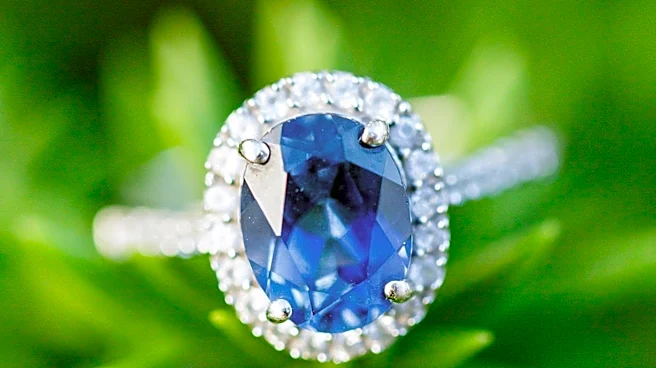
unique styles that reflect their personal tastes over strict adherence to tradition. Experts in the jewelry industry, such as Sharmit Shah, Founder and CEO of Sunshine Diamonds Ltd., and Fie Isolde, Founder & Creative Director of Fie Isolde, note a significant change where the setting of the ring has become as important as the center stone for expressing individuality. Popular nontraditional styles include East-West settings, bezel settings, half-bezel settings, open ring settings, button-back settings, and Toi et Moi rings. These designs offer varied aesthetics and practical benefits, such as enhanced security for the diamond or a more modern, sleek appearance. Celebrities like Zendaya, Miley Cyrus, and Megan Fox have been seen sporting these unique ring styles, further contributing to their rising popularity.
Why It's Important?
This trend signifies a broader cultural movement towards individual expression and away from rigid societal norms, impacting the U.S. jewelry industry significantly. Jewelers are adapting by offering more customizable options and focusing on design innovation to meet consumer demand for unique pieces. This shift can lead to increased competition among designers to create distinctive settings and a greater emphasis on craftsmanship beyond just the diamond's carat weight. For consumers, it means a wider array of choices that better represent their personal stories and values, potentially making the engagement ring a more meaningful symbol of their relationship. The embrace of nontraditional designs also challenges the long-standing marketing strategies of the diamond industry, which historically emphasized classic solitaire styles. This evolution could encourage more sustainable and ethically sourced options as personalization often extends to the origin and impact of materials.
What's Next?
The jewelry industry is expected to continue innovating in design and customization to cater to this demand for personalized engagement rings. We may see further advancements in bespoke services, allowing couples to co-create rings that are truly one-of-a-kind. Designers will likely explore new materials, setting techniques, and combinations of gemstones to offer even more diverse options. The influence of social media platforms like Pinterest and Instagram will continue to play a crucial role, as they serve as primary sources of inspiration for couples seeking unique designs. This trend could also lead to a re-evaluation of what constitutes a 'valuable' or 'desirable' engagement ring, shifting the focus from sheer size or traditional prestige to artistic merit and personal significance. Educational efforts by jewelers about the various setting types and their benefits will also become more prevalent to inform consumers about their choices.
Beyond the Headlines
Beyond the aesthetic and market implications, the rise of nontraditional engagement rings reflects deeper societal changes, particularly among younger generations. It highlights a growing preference for authenticity and self-expression over conformity and traditional expectations. This movement can be seen as part of a larger trend where consumers are increasingly seeking products and experiences that resonate with their personal identity and values, rather than simply following established conventions. The engagement ring, a powerful symbol of commitment, is evolving to represent not just the union of two people, but also their individual journeys and shared vision for the future. This cultural shift could also influence other consumer markets, encouraging brands to offer more personalized and unique products across various sectors, ultimately fostering a more diverse and individualistic consumer landscape.