
What's Happening?
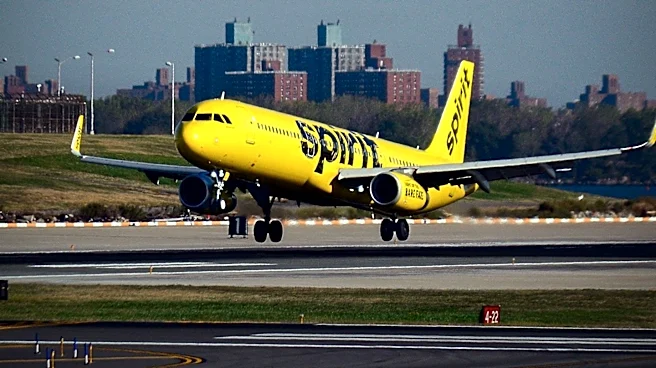
Spirit Airlines, an airline company founded in 1980 and headquartered in Dania Beach, FL, is currently embroiled in a legal dispute. The controversy stems from allegations that the airline shut down its
operations in May and subsequently sold its internal data to Google for $10 million. This alleged transaction has ignited a legal battle concerning employee privacy. Spirit Airlines operates domestic, international, and regional flights, employing 6,658 people globally, with 3,029 located in Northern America. The company's stock is listed on the NYSE under the ticker SAVE, and its market capitalization was reported as $284.75 million as of October 29, 2024. The core of the legal challenge revolves around the implications of selling internal data, particularly regarding the privacy rights of its employees.
Why It's Important?
This situation holds significant importance for several reasons, primarily concerning data privacy and corporate responsibility within the U.S. business landscape. If the allegations are proven true, the sale of internal data could set a precedent for how companies handle sensitive employee information during operational changes or shutdowns. This could lead to increased scrutiny from regulatory bodies and potentially new legislation aimed at protecting employee data. For Spirit Airlines, a negative outcome in this legal battle could severely damage its reputation, lead to substantial financial penalties, and erode public trust. It also raises questions about the ethical obligations of companies to their employees, especially when facing financial difficulties or operational restructuring. The case could influence how other U.S. airlines and businesses approach data management and employee privacy in the future, potentially impacting industry standards and legal frameworks.
What's Next?
The immediate next step will involve the progression of the legal battle, likely through court proceedings where the allegations of data sale and employee privacy violations will be thoroughly examined. Spirit Airlines will need to defend its actions, while those bringing the legal challenge will present evidence to support their claims. The outcome of this case could lead to various consequences, including significant financial penalties for Spirit Airlines if found liable, potential compensation for affected employees, and a re-evaluation of data handling policies across the airline industry. Regulatory bodies may also initiate investigations or issue new guidelines regarding corporate data sales and employee privacy. This situation could also prompt other companies to review their data retention and privacy policies to avoid similar legal challenges, potentially leading to a broader shift in corporate data governance practices.
Beyond the Headlines
Beyond the immediate legal and financial implications, this case touches upon deeper ethical and societal concerns regarding data ownership and privacy in the digital age. The alleged sale of internal data, particularly employee information, highlights the vulnerability of personal data held by corporations. It raises fundamental questions about who owns this data, what rights individuals have over it, and the extent to which companies can monetize it, especially during periods of operational distress. This incident could contribute to a broader public discourse on data ethics, potentially influencing consumer and employee expectations regarding privacy. It may also spur technological advancements in data anonymization and security to prevent similar incidents. The long-term impact could be a redefinition of corporate responsibility concerning data, pushing for greater transparency and accountability in how personal information is managed and protected within the U.S. business ecosystem.