


What's Happening?
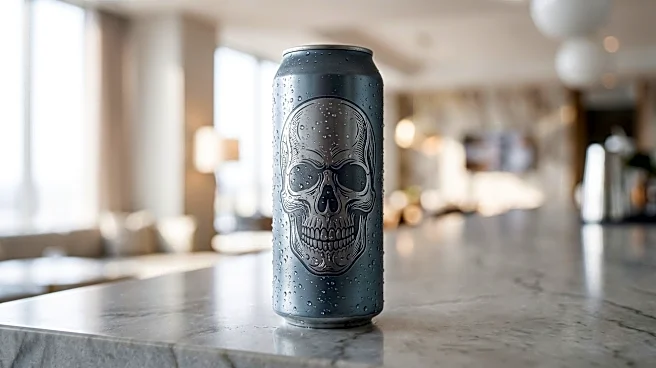
The premium bottled water market in the United States is experiencing rapid growth, largely driven by Generation Z consumers who are increasingly opting for upscale bottled water over alcoholic beverages. Brands like Liquid Death are capitalizing on this
trend with distinctive marketing, unique packaging, and a variety of flavors. Liquid Death, known for its beer-can-like aluminum design and skull motif, offers low-calorie, caffeine-free sparkling water with flavors reminiscent of popular sodas, as well as functional bottled waters containing protein, dietary fiber, and collagen. This shift is part of a broader change in U.S. drinking culture, where alcohol consumption has declined, and non-alcoholic options are gaining popularity. According to IWSR, a research firm, total U.S. consumption of beer, wine, spirits, and cocktails decreased by 5% last year. Young people are reportedly choosing water even in social settings like large clubs in Miami.
Why It's Important?
This trend signifies a significant shift in consumer preferences, particularly among younger demographics, impacting both the beverage and hospitality industries. The decline in alcohol consumption and the rise of premium bottled water present new opportunities for beverage companies to innovate and market non-alcoholic alternatives. The projected growth of the premium bottled water market to $45.2 billion by 2033 indicates a substantial economic impact, attracting new brands and fostering competition. This also affects social venues, as establishments may need to adapt their offerings to cater to a clientele that increasingly prefers non-alcoholic options. The success of brands like Liquid Death highlights the power of unique branding and social media marketing in capturing the attention of Gen Z, influencing broader marketing strategies across various sectors.
What's Next?
The premium bottled water market is expected to continue its rapid expansion, with more brands likely to emerge, offering innovative products and marketing strategies to attract health-conscious consumers. This growth could lead to increased investment in sustainable packaging and sourcing methods, as environmental concerns are often a priority for younger generations. The hospitality industry, including restaurants and clubs, may further integrate sophisticated non-alcoholic beverage menus, potentially including curated water selections, as seen with water sommeliers gaining attention. The ongoing decline in alcohol consumption could prompt alcoholic beverage companies to diversify their portfolios or invest in non-alcoholic alternatives to remain competitive in a changing market landscape.
Beyond the Headlines
The rise of premium bottled water and the decline in alcohol consumption among Gen Z reflect deeper societal shifts towards health, wellness, and mindful consumption. This trend extends beyond mere beverage choices, indicating a cultural re-evaluation of social norms surrounding drinking and leisure activities. The emphasis on unique branding and product differentiation, as exemplified by Liquid Death, suggests a consumer base that values authenticity and experiences over traditional status symbols. This could lead to a broader redefinition of 'luxury' in everyday products, where health benefits and ethical considerations play a more prominent role. The phenomenon also highlights the increasing influence of social media in shaping consumer trends and brand loyalty, particularly among younger demographics, underscoring the need for companies to engage effectively on these platforms.