





What's Happening?
Ana Patkovic, former visual merchandising project manager at Ganni, discusses the evolving nature of her role, emphasizing the need for visual merchandisers to be 'all-rounders.' She notes that the profession now requires a deep understanding of sales
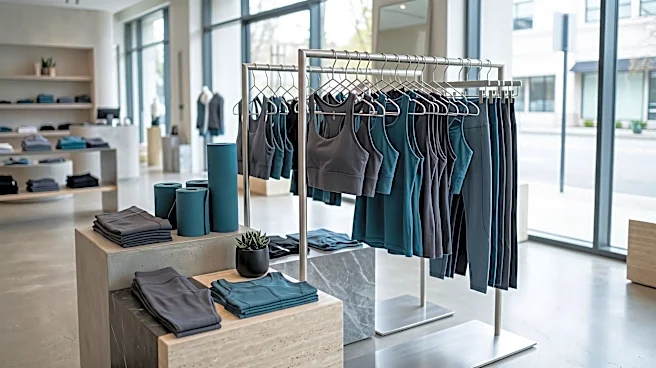
figures, KPIs, performance metrics, marketing, trends, and brand storytelling, in addition to design and architectural skills. Patkovic highlights that the increasing integration of AI and optimized workflows into daily operations is making this broad skillset increasingly standard. She also points out the pressure digital developments place on brick-and-mortar stores, where physical spaces need to adapt faster and offer authentic, human experiences that align with online narratives. Patkovic advocates for flexible fixtures, responsible material choices, and a focus on experiential retail.
Why It's Important?
The evolution of visual merchandising, as described by Ana Patkovic, reflects significant shifts in the U.S. retail industry driven by technological advancements and changing consumer expectations. The integration of AI and optimized workflows means that retail professionals need a more analytical and data-driven approach, moving beyond purely creative roles. This impacts workforce development, requiring new skill sets and continuous learning for those in retail design and management. For businesses, adapting to these changes is crucial for maintaining competitiveness in a market where online and offline experiences must be seamlessly integrated. Companies that fail to evolve their visual merchandising strategies to incorporate data, flexibility, and authentic customer experiences risk losing engagement and sales in an increasingly digital-first retail landscape.
What's Next?
The retail sector will likely see continued pressure for visual merchandisers to develop a broader range of skills, encompassing both creative and analytical competencies. Educational programs and professional development initiatives may adapt to offer training in areas like data analysis, AI integration, and sustainable design for retail spaces. Stores are expected to further embrace experiential retail, utilizing flexible and adaptable display elements that can be easily updated to align with digital campaigns and new collections. There will also be an increased focus on sustainability in visual merchandising, with greater emphasis on reuse and responsible material choices from the initial brief. The goal will be to create cohesive brand narratives across all channels, ensuring that the physical store experience complements and enhances the online presence.
Beyond the Headlines
The transformation of visual merchandising, influenced by AI and digital pressures, points to a broader redefinition of physical retail spaces in the digital age. Beyond mere product display, stores are becoming critical touchpoints for brand storytelling and experiential engagement, offering something that online shopping cannot fully replicate. This shift has cultural implications, as retail environments evolve from transactional spaces to immersive brand worlds that reflect consumer values like sustainability and authenticity. The ethical dimension arises in ensuring that AI integration enhances, rather than diminishes, the human element of shopping and design. The challenge for retailers is to leverage technology to create more compelling and personalized experiences while maintaining a genuine connection with their audience, ultimately shaping the future of how consumers interact with brands in physical settings.