



What's Happening?
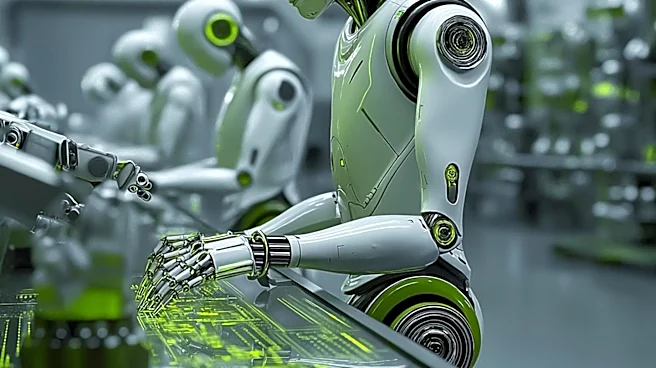
Volvo Cars has initiated the deployment of AEON humanoid robots from Hexagon Robotics at its manufacturing plant in Ghent, Belgium. This marks the first Volvo facility to test this form factor, with the goal of integrating these machines into active vehicle
production by mid-2027. Currently, the robots are undergoing on-site training alongside human employees and existing automation equipment. Volvo's internal manufacturing team is collaborating with Hexagon Robotics engineers to validate the robots' ability to handle repetitive and ergonomically challenging tasks without requiring significant modifications to the plant's infrastructure. The training involves imitation learning, where robots learn by observing and replicating human movements. The initial focus is on precise component placement into two fixtures, with plans to gradually increase complexity to multi-part handling and autonomous navigation. A broader factory pilot with additional AEON units is scheduled for the first half of 2027.
Why It's Important?
This deployment signifies a growing trend in the automotive industry towards general-purpose mobile manipulation to address automation gaps that traditional fixed robotic arms cannot economically resolve. For Volvo Cars, the integration of AEON humanoids aims to improve ergonomics for human workers by having robots undertake physically demanding tasks. This move could lead to increased efficiency and potentially reduce workplace injuries. For Hexagon Robotics, the Ghent program adds significant commercial traction in the industrial sector, following similar deployments by BMW Group and a commitment from Schaeffler to purchase at least 1,000 AEON units. The success of this pilot could influence wider adoption of humanoid robotics in manufacturing across the U.S. and globally, impacting labor markets, production costs, and the overall competitiveness of the automotive sector.
What's Next?
Following the initial training phase, Volvo plans to gradually increase the operational complexity for the AEON robots. This includes expanding beyond single-component placement to multi-part manipulation, enabling autonomous navigation across production zones, and integrating the robots with the Ghent plant’s existing automated machinery. If these validation phases are successful, additional AEON units will be brought to Ghent during the first half of 2027 for a formal factory pilot. The ultimate goal is to achieve live production deployment by mid-2027. The companies have not yet disclosed the specific number of AEON units currently on-site or planned for the 2027 pilot, nor which vehicle lines will incorporate the robots. Future developments will likely involve assessing the robots' performance, scalability, and economic viability in a full production environment.
Beyond the Headlines
The adoption of humanoid robots like AEON in manufacturing raises several deeper implications. Ethically, it prompts discussions about the future of human labor in industrial settings and the potential for job displacement, even as Volvo emphasizes improving ergonomics for human workers. Legally, the integration of autonomous robots into complex factory environments could introduce new challenges related to safety regulations, liability in case of malfunction, and intellectual property concerning robot-learned processes. Culturally, the increasing presence of human-like robots in workplaces may shift perceptions of human-robot interaction and collaboration. Long-term, this development could accelerate the broader trend of automation, leading to more flexible and adaptable manufacturing processes, but also requiring significant investment in retraining and upskilling the human workforce to manage and maintain these advanced robotic systems.