




What's Happening?
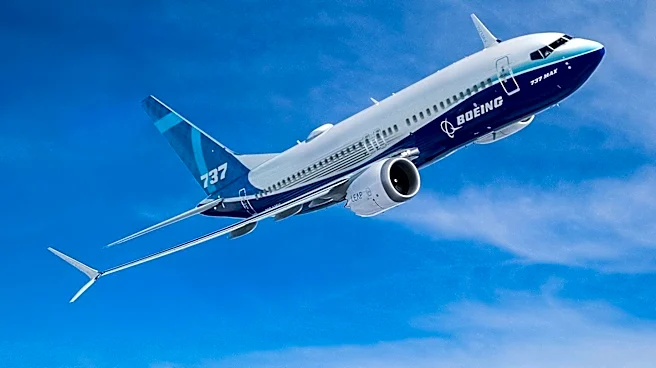
President Trump stated in a CNBC interview on November 23 that he believes China will purchase an additional 250 Boeing passenger jets, following an initial agreement in May for 200 aircraft. This announcement comes after a U.S.-China leaders' summit
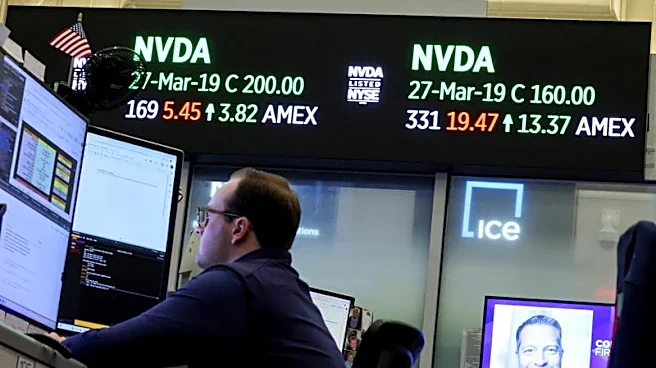
and is seen as a potential step towards Boeing re-entering the Chinese market. The 200 jets agreed upon in May were a preliminary commitment, and according to Boeing CEO Kelly Ortberg, they were an 'expression of purchase intent' rather than confirmed orders. Similarly, the additional 250 jets mentioned by President Trump are currently his personal expectation and not a finalized transaction, with neither Beijing nor Chinese carriers having disclosed further details. Despite the lack of firm orders, Boeing shares rose 4.17% in Monday's trading session, closing at $162.39, marking the biggest single-day gain since early August.
Why It's Important?
This development is significant for Boeing and the U.S. aerospace industry, as China represents a crucial market for aircraft manufacturers. Boeing has faced a virtual absence of new Chinese passenger jet orders since 2017, with European rival Airbus gaining substantial market share. Both Boeing and Airbus project that China will require at least 9,000 new aircraft by 2045, making it a highly attractive and competitive market. President Trump's remarks, even if based on verbal expectations, have fueled investor optimism about a potential reopening of the Chinese market for Boeing. A substantial order from China could provide a significant boost to Boeing's production lines, revenue, and global market position, impacting thousands of jobs within the U.S. manufacturing sector and its supply chain. Conversely, if these verbal expectations do not materialize into firm orders, it could lead to market disappointment and continued challenges for Boeing in this key region.
What's Next?
The immediate next steps involve monitoring whether China or Chinese carriers will officially confirm any additional purchase agreements for Boeing jets. While President Trump expressed confidence, the details regarding aircraft mix, delivery timelines, and negotiation status remain unspecified. Boeing has not yet responded to President Trump's latest remarks, and a spokesperson declined to comment. The capital markets will likely continue to react to any official announcements or further indications of progress in these potential deals. The situation highlights the ongoing economic and trade interactions between the U.S. and China, with aircraft purchases serving as a barometer for these relations. The focus will be on converting these expressions of intent into firm, signed orders, which would then trigger the manufacturing and delivery processes for Boeing.
Beyond the Headlines
The recurring announcements of potential large-scale aircraft purchases, even when still in the 'intent stage,' underscore the complex interplay between international trade, political diplomacy, and corporate strategy. President Trump's role as a 'salesman-in-chief' for a major U.S. corporation like Boeing illustrates how high-level political engagement can directly influence market sentiment and business prospects, particularly in sectors with significant national economic interest. This dynamic also highlights the strategic importance of the Chinese market for global manufacturers and the competitive pressures faced by companies like Boeing from rivals such as Airbus. The situation also raises questions about the transparency and finality of such large-scale international trade agreements, as verbal expectations can significantly move markets before any concrete contracts are signed, potentially creating volatility for investors.