



What's Happening?
A professional gardener, with over two decades of experience, emphasizes that the most crucial gardening task to undertake in October is the thorough cleaning and sharpening of garden tools. This advice, shared by a gardening expert, prioritizes tool maintenance
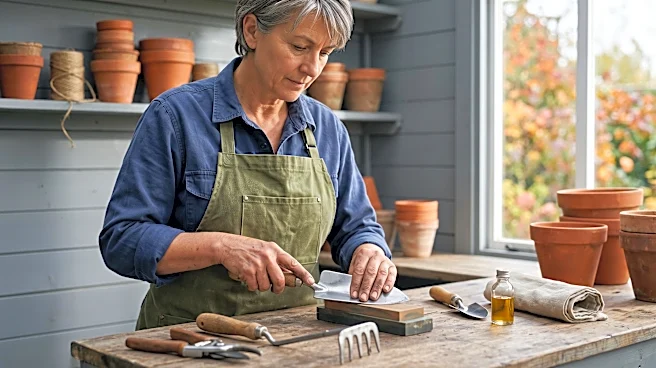
over more common autumn chores like raking leaves or cutting back perennials. The process involves removing dirt, dried plant material, and sap, followed by a proper wash for grubby tools, ensuring they are thoroughly dried. Subsequently, blades are inspected for dullness, rust, or damage, and sharpened if necessary. Finally, metal parts are lightly lubricated to prevent rust, especially before tools are stored for the winter. This approach is presented as a foundational step that makes subsequent gardening tasks easier and more efficient.
Why It's Important?
This focus on tool maintenance is significant because it directly impacts the efficiency, safety, and longevity of gardening equipment. Properly maintained tools perform better, reducing the physical effort required for tasks like pruning and cutting. Sharp tools make clean cuts, which are healthier for plants, preventing disease and promoting better growth. Furthermore, lubricating metal parts and cleaning tools before storage prevents rust and deterioration, extending their lifespan and saving gardeners the cost of frequent replacements. This practice also ensures that tools are ready for immediate use when needed, avoiding delays and frustration. By prioritizing this often-overlooked task, gardeners can foster a more sustainable and cost-effective approach to their hobby or profession, ensuring their equipment remains in optimal condition for years to come.
What's Next?
Following the recommended tool maintenance, gardeners can proceed with other seasonal tasks, which will be made easier by having sharp and clean tools. These tasks may include planting spring-flowering bulbs, perennials, and protecting vulnerable container plants before the first frost. The expert also suggests collecting seeds from desired plants and removing diseased plant material to prevent the spread of pathogens. However, the advice also encourages a selective approach to fall cleanup, suggesting that not all plant material needs to be removed, as some can provide habitat for wildlife or add winter interest. The emphasis is on a manageable fall garden plan, focusing on tasks with deadlines and those that contribute to a healthier, more enjoyable garden in the long term.
Beyond the Headlines
The recommendation to prioritize tool maintenance reflects a deeper philosophy in gardening that values preparation, efficiency, and sustainability. It highlights that effective gardening is not just about planting and harvesting, but also about the care and respect for the instruments used in the process. This approach can be seen as a metaphor for broader life skills, where foundational preparation often leads to greater success and less effort in the long run. Ethically, it promotes responsible consumption by extending the life of tools, reducing waste, and minimizing the need for new purchases. Culturally, it challenges the common perception of gardening as solely an aesthetic pursuit, emphasizing the practical and methodical aspects that underpin successful cultivation. This shift in focus encourages gardeners to adopt a more holistic and mindful approach to their craft.