




What's Happening?
A new recipe for Easy Sheet-Pan Low-Sodium Shrimp and Veggies provides a quick and healthy meal solution, ready in under 30 minutes. This recipe emphasizes the use of fresh ingredients and avoids high-sodium bottled sauces, opting instead for a seasoning
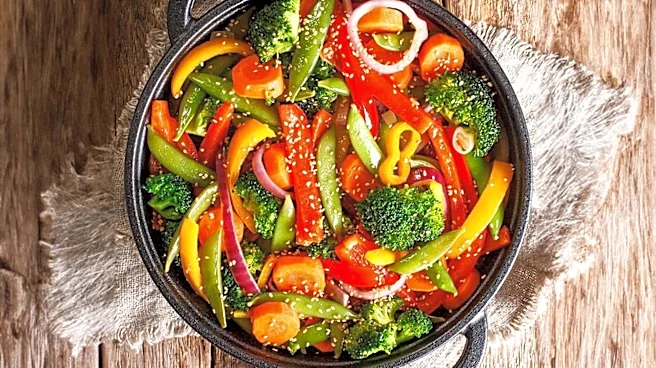
blend of olive oil, garlic, and lemon. The dish features raw shrimp, zucchini, red bell pepper, broccoli, and cherry tomatoes, all prepared on a single baking sheet. Instructions include thawing frozen shrimp under cool water and patting them dry, preheating the oven to 425°F, and roasting vegetables for 10 minutes before adding the seasoned shrimp and cherry tomatoes for an additional 5-6 minutes. This method ensures the shrimp are cooked to perfection without becoming rubbery, resulting in a meal that is both flavorful and nutritionally balanced.
Why It's Important?
This recipe is significant for U.S. households seeking convenient, healthy, and low-sodium meal options. With increasing awareness of dietary sodium intake and its impact on health, particularly for individuals with conditions like Duchenne muscular dystrophy with cardiac involvement, this recipe offers a practical solution. It provides a substantial dose of lean protein from shrimp and essential nutrients from vegetables, all while keeping sodium levels in check. The sheet-pan method simplifies cooking and cleanup, making it appealing for busy individuals and families. This approach supports public health initiatives promoting healthier eating habits and can help reduce reliance on processed foods that often contain high levels of sodium, contributing to better overall cardiovascular health.
What's Next?
The popularity of such quick, healthy, and low-sodium recipes is likely to grow, influencing meal planning and dietary choices across the U.S. Consumers may seek out more similar recipes that prioritize fresh ingredients and minimal processing. Food bloggers, nutritionists, and health-focused platforms may feature and adapt this type of cooking, further disseminating these healthy eating principles. This trend could also encourage food manufacturers to develop more low-sodium seasoning blends and convenience products that align with these dietary preferences. Additionally, healthcare providers and dietitians might recommend such recipes as part of dietary plans for patients managing sodium intake, reinforcing the importance of home-cooked meals.
Beyond the Headlines
Beyond its immediate utility as a recipe, this development reflects a broader cultural shift towards mindful eating and health-conscious cooking in the U.S. It highlights a growing demand for transparency in food preparation and an aversion to artificial additives and excessive sodium. This trend also underscores the increasing value placed on efficiency in the kitchen, as consumers seek ways to prepare nutritious meals without extensive time commitments. The emphasis on low-sodium options points to a deeper understanding of dietary impacts on chronic diseases, moving beyond general healthy eating to more targeted nutritional strategies. This culinary approach could foster greater food literacy, empowering individuals to take more control over their dietary health through simple, accessible cooking methods.