

What's Happening?
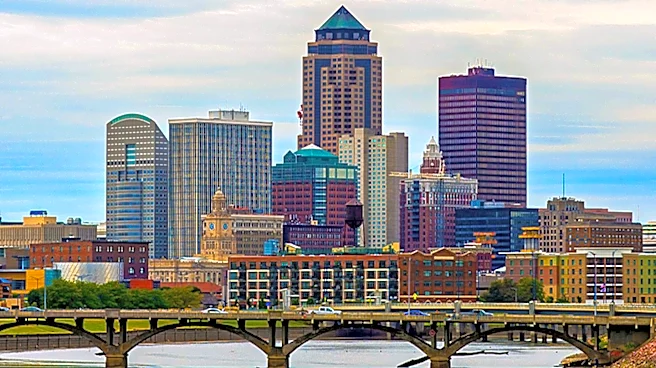
Developer Tim Rypma, operating as Threshing Warehouse LLC, has acquired a historic warehouse property located at 108 E. Fourth St. in Des Moines for $1.6 million. The property was purchased from Steven and Diane Kreutzer and Lori and Mark Klein. Rypma is proposing
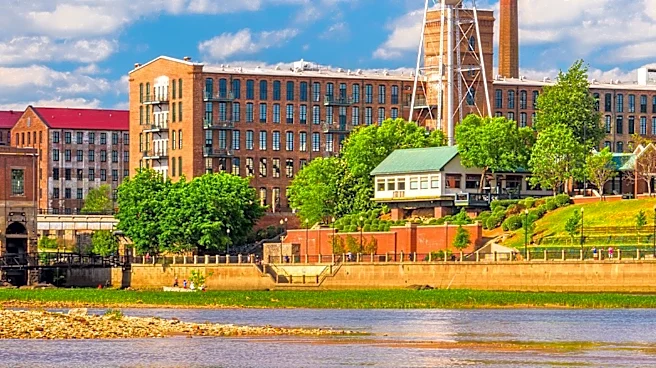
a $13.7 million historical renovation of the two-story, 41,000-square-foot masonry building, which was originally constructed in 1895. The renovation plans involve converting the building into office space. The Des Moines City Council approved an Urban Renewal Development Agreement in June, and Rypma is actively seeking state and national historic tax credits to support the project. Renovation details include masonry rehabilitation, new double-hung window replacements, and the addition of a garden patio, raised patio, and a new passenger elevator.
Why It's Important?
This acquisition and planned renovation are significant for Des Moines' urban development and economic landscape. The conversion of a historic warehouse into modern office space contributes to the revitalization of the downtown area, attracting new businesses and potentially creating jobs. The substantial investment of $13.7 million signals confidence in the city's economic growth and its appeal as a business hub. Furthermore, the pursuit of state and national historic tax credits highlights a commitment to preserving the architectural heritage of Des Moines while adapting it for contemporary use. This project could serve as a model for other cities looking to blend historical preservation with economic development, demonstrating how older structures can be repurposed to meet current market demands and contribute to urban renewal.
What's Next?
The next steps for this project involve securing the state and national historic tax credits that Developer Tim Rypma is seeking. Once these financial incentives are in place, the detailed renovation work on the 1895 warehouse is expected to commence. The approval of the Urban Renewal Development Agreement by the Des Moines City Council in June indicates a clear path forward for the project. The renovation will focus on transforming the historic structure into modern office spaces, which will then be available for lease. This development is anticipated to attract new businesses to the area, contributing to the local economy and potentially spurring further revitalization efforts in the surrounding historic district.
Beyond the Headlines
This project extends beyond a simple real estate transaction, touching upon broader themes of urban identity and sustainable development. The adaptive reuse of a historic building like the 1895 warehouse reflects a growing trend in urban planning to conserve cultural heritage while fostering economic growth. It addresses the challenge of balancing modernization with preservation, offering a blueprint for how cities can maintain their unique character amidst development pressures. The integration of historic tax credits also underscores the public-private partnerships essential for such large-scale preservation efforts, demonstrating how financial incentives can drive responsible urban renewal. This approach not only revitalizes physical spaces but also reinforces a community's connection to its past, creating a more dynamic and historically rich urban environment.