










What's Happening?
Gold Fields' CEO, Mike Fraser, has downplayed the likelihood of the South African gold producer increasing its offer for Australian gold miner Northern Star. Fraser indicated that Northern Star must first demonstrate openness to a merger before Gold Fields would
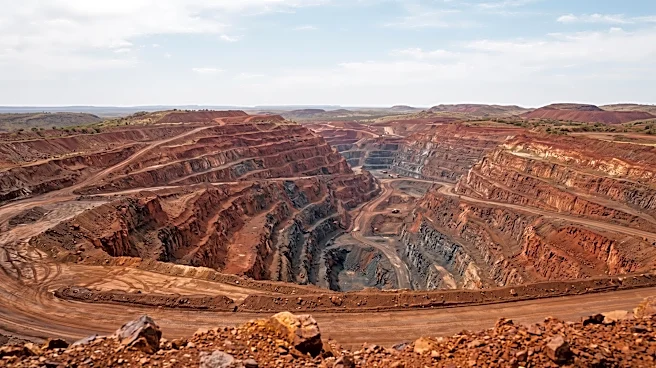
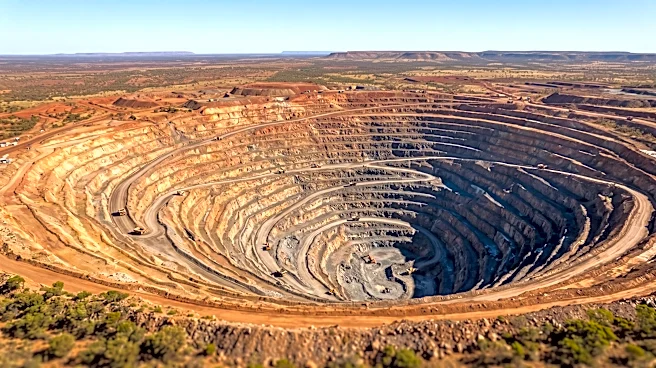
consider a revised proposal. Gold Fields had previously made a A$38.7-billion ($27.1-billion) buyout offer in shares and cash for Northern Star, aiming to create the world's second-largest gold producer. However, Northern Star, which has been grappling with poor performance, rejected the offer, opting instead to pursue its own operational overhaul plans, influenced by activist investor Elliott Investment Management. Both companies operate gold mines in Western Australia, including Northern Star's Super Pit, Australia's largest gold mine.
Why It's Important?
This development is significant for the global gold mining industry, impacting investor confidence and the competitive landscape. A merger between Gold Fields and Northern Star would create a formidable entity, potentially reshaping market dynamics and influencing gold prices. For U.S. investors with stakes in gold mining companies or gold-backed assets, the outcome of this potential acquisition could affect portfolio values. The involvement of activist investor Elliott Investment Management highlights the increasing role of shareholder activism in corporate decision-making, a trend that is also prevalent in the U.S. business environment. The strategic logic of combining operations to achieve synergies, as cited by Gold Fields, reflects a common motivation for mergers and acquisitions across various U.S. industries seeking to enhance efficiency and market position.
What's Next?
Gold Fields' CEO Mike Fraser is currently on a roadshow in Australia to engage with investors and build support for the merger, emphasizing the strategic benefits. While Gold Fields' largest shareholder, Public Investment Corporation, sees the strategic logic, it has expressed concerns about potential cost escalation and the risk of overpaying. Fraser has stated that he would withdraw the offer if there is no alignment on value creation from Northern Star. The situation suggests a period of continued negotiation and strategic positioning between the two companies and their respective shareholders. Northern Star's board remains focused on acting in the best interests of its shareholders, which includes evaluating proposals that offer value beyond what it can achieve as a standalone entity. The market will be watching for any signs of Northern Star's willingness to engage or any revised offers from Gold Fields.
Beyond the Headlines
The standoff between Gold Fields and Northern Star illustrates the complexities of cross-border mergers and acquisitions, particularly when dealing with differing corporate cultures, shareholder expectations, and market valuations. The significant disparity in enterprise multiples between Gold Fields (3.5 to 4 times earnings) and Northern Star (7 to 8 times earnings) highlights the challenges in valuing companies and achieving consensus on fair terms. This situation also underscores the broader trend of consolidation in the mining sector, driven by the pursuit of economies of scale, operational efficiencies, and access to new reserves. For the U.S. market, such consolidations can impact the availability and pricing of raw materials, influencing manufacturing costs and consumer prices. The role of activist investors like Elliott Investment Management further complicates these deals, as they often push for short-term gains, potentially clashing with long-term strategic visions.