




What's Happening?
Ero Copper, a company listed on the TSX and NYSE, has temporarily halted all mining and processing activities at its Tucumã copper mine in Brazil. This suspension follows a notice from the Pará State Environment and Sustainability Secretariat (SEMAS),
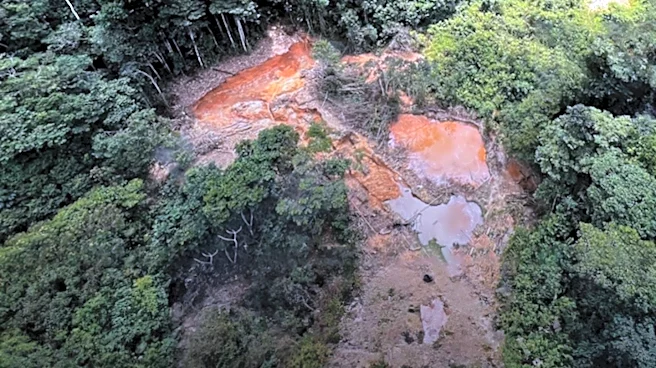
which was issued after heavy rainfall at the mine led to two localized overflow events. The rainfall, which included peaks above 70 mm per hour and totaled approximately 275 mm in the first 20 days of November (170% above the seasonal norm), overwhelmed the pumping capacity of a surface contact-water sump. SEMAS conducted an independent assessment and identified anomalous pH readings in local water samples near the operation, prompting the temporary suspension of mining. Processing operations were initially permitted to continue, but all activities are now suspended.
Why It's Important?
The suspension of operations at the Tucumã copper mine highlights the significant environmental and operational risks that extreme weather events pose to the mining industry. For Ero Copper, this halt will likely result in production delays and financial penalties, as the company has already incurred fines of approximately $2.9 million related to the overflow events. The incident underscores the increasing scrutiny from environmental regulators, such as SEMAS, on mining operations, particularly concerning water management and pollution control. For the broader copper market, any prolonged disruption from a significant producer like Tucumã could impact global supply, potentially leading to price fluctuations. While the immediate impact on U.S. industries is indirect, disruptions in global copper supply can affect sectors reliant on copper, such as electronics, construction, and automotive manufacturing, potentially increasing costs or causing supply chain delays.
What's Next?
Ero Copper is currently engaging in dialogue with SEMAS and plans to submit a final remediation plan for review soon. The company expects to resume full operations at Tucumã once the plan is approved and implemented. In the interim, Ero Copper has activated additional resources to enhance water pumping and storage capacity and has relocated stockpiles to reduce potential contact water in affected areas. The company remains committed to remediating the impacted areas. The timeline for resuming full operations will depend on SEMAS's approval of the remediation plan and the successful implementation of corrective measures. Future operations will likely involve enhanced environmental monitoring and infrastructure to mitigate the risks of similar weather-related incidents.
Beyond the Headlines
This incident at the Tucumã mine reflects a growing global challenge for resource industries operating in regions susceptible to extreme weather patterns, which are increasingly linked to climate change. Companies are facing heightened pressure from regulators and the public to demonstrate robust environmental management and climate resilience. The financial penalties and operational suspensions serve as a strong deterrent against environmental non-compliance and emphasize the need for proactive risk management strategies. This event could prompt other mining companies to review and strengthen their own environmental protocols, particularly regarding water management and emergency response to extreme weather, to avoid similar disruptions and regulatory actions. It also highlights the complex interplay between industrial activity, environmental protection, and climate variability.