






What's Happening?
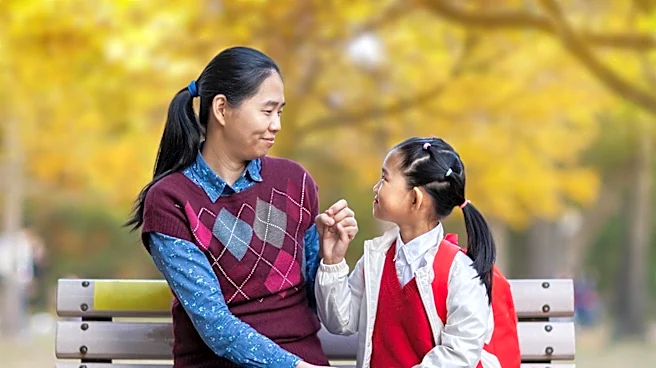
Nancy Jorgensen, a Wisconsin writer, educator, and musician, is grappling with her daughter Gwen's request for her and her husband to move to Colorado to be closer to Gwen's family. Gwen expressed a desire for weekly family dinners and for her children,
Stanley and George, to know their grandparents better. Jorgensen, who previously defined her identity through her children's activities, has since built a fulfilling life in Wisconsin, including involvement with a Renaissance ensemble, piano collaborations, writing, and volunteering. While she cherishes time with her grandchildren and daughter, the prospect of leaving her established community and personal pursuits in Wisconsin presents a significant dilemma. She has communicated to Gwen the difficulty of rebuilding her life elsewhere, emphasizing the importance of her current connections and activities.
Why It's Important?
This personal narrative highlights a common and deeply emotional challenge faced by many parents in the U.S. as their children establish independent lives and families. It underscores the evolving nature of parental identity, particularly for mothers, who often dedicate significant portions of their lives to child-rearing and then seek to redefine themselves in later stages. The story reflects the tension between familial obligations and personal fulfillment, a theme that resonates with a broad demographic of aging parents and their adult children. It also touches on the importance of community and established social networks, which are crucial for well-being and often difficult to replicate in a new location. The narrative contributes to a broader conversation about intergenerational relationships, personal boundaries, and the pursuit of individual happiness within family contexts.
What's Next?
For now, Nancy Jorgensen plans to remain in Wisconsin, but the invitation from her daughter Gwen remains open, suggesting that circumstances could change in the future. The family is scheduling more frequent visits, indicating a compromise to maintain close ties without a permanent relocation. This ongoing dialogue reflects a common approach to navigating such family decisions, where direct confrontation is replaced by layered conversations and mutual understanding. The situation may continue to evolve as Gwen's children grow and as Jorgensen's own life stages progress, potentially leading to future reconsiderations or alternative arrangements that balance everyone's needs. The narrative suggests a continuous process of negotiation and adaptation within the family.
Beyond the Headlines
This story delves into the often-unspoken emotional labor involved in family relationships, particularly the guilt and heartbreak that can accompany decisions that prioritize personal needs over perceived familial expectations. It challenges the traditional notion that 'good mothers always say yes,' advocating for a more nuanced understanding of maternal roles that includes self-care and individual pursuit. The narrative also subtly explores the geographical dispersion of families in modern America, where adult children often live far from their parents, creating logistical and emotional complexities for maintaining close relationships. It prompts reflection on how individuals can honor family bonds while also protecting their own hard-earned identities and communities, highlighting the importance of open communication and mutual respect in navigating these complex dynamics.