







What's Happening?
Santos, a leading energy company, has announced two new non-binding LNG agreements aimed at strengthening its global LNG portfolio and its position as a reliable energy supplier in the Asia-Pacific region. The company has agreed on key commercial terms
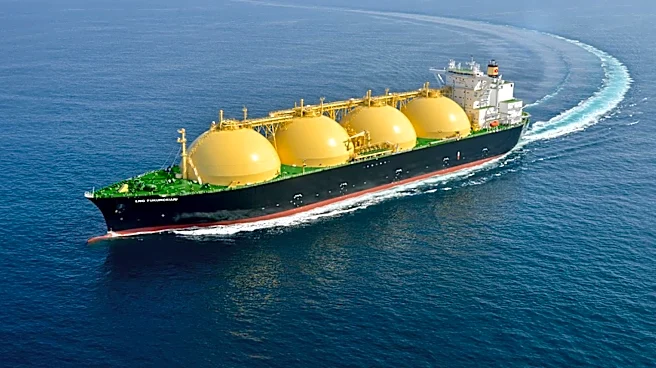
with POSCO Steel Co Ltd for a 10-year supply of LNG, sourced from Santos' diversified global portfolio, with deliveries commencing in 2030 or 2031. Additionally, Santos has entered into a non-binding Heads of Agreement with Western LNG to purchase approximately one million tonnes of LNG per annum from the proposed Ksi Lisims LNG project in British Columbia, Canada. This supply, expected to begin around 2031, will be for a term of up to 20 years. These agreements are part of Santos' strategy to optimize revenue through high-value, long-term contracts and complement its existing commitments. The Ksi Lisims LNG project is a 12 Mtpa floating LNG export facility developed by the Nisga’a Nation, Rockies LNG, and Western LNG, designed to supply Asian markets using hydroelectric power for lower-emissions LNG production.
Why It's Important?
These agreements are significant for several reasons. For Santos, they represent a strategic move to grow LNG sales volumes without increasing upstream capital investment, enhance long-term supply flexibility for its Asian customers, and diversify its LNG supply base geographically. The Canadian LNG from Ksi Lisims offers a competitive cost of supply and a secure, relatively short shipping route to premium North Asian markets, which is crucial for energy security in the region. For the Asia-Pacific market, these deals contribute to a more stable and diversified energy supply, supporting the growing energy needs of countries like South Korea, represented by POSCO Steel. The focus on lower-emissions LNG production from the Ksi Lisims project also aligns with global efforts towards decarbonization, offering a cleaner energy option for industrial consumers. This expansion underscores the increasing demand for LNG and the strategic importance of securing diverse supply sources in a volatile global energy landscape.
What's Next?
The immediate next steps involve the negotiation and execution of definitive agreements, including LNG Sale and Purchase Agreements, and securing all necessary corporate approvals for both the POSCO and Western LNG deals. For the Ksi Lisims LNG project, further development and final investment decisions will be critical before supply can commence around 2031. Santos will continue to integrate these new supply streams into its existing portfolio, optimizing volumes based on market conditions, customer requirements, and regional pricing opportunities. The company also aims to build on these relationships to support the energy security and decarbonization goals of its customers across Asia. The successful implementation of these agreements will solidify Santos' position as a key player in the global LNG market and enhance energy stability in the Asia-Pacific region.
Beyond the Headlines
The expansion of Santos' LNG portfolio, particularly with Canadian supply, highlights broader shifts in global energy markets. The emphasis on lower-emissions LNG from projects like Ksi Lisims reflects a growing trend where environmental considerations are increasingly influencing energy procurement and development. This could set a precedent for future LNG projects to prioritize sustainable production methods. Furthermore, the diversification of supply away from traditional sources underscores geopolitical risks and the desire for energy independence among importing nations. The long-term nature of these contracts (10 to 20 years) indicates a sustained demand for natural gas as a transition fuel, even as the world moves towards renewable energy. This also strengthens Canada's role as a significant energy exporter, leveraging its natural gas reserves and strategic Pacific coast access to meet Asian demand, potentially fostering new trade relationships and economic ties.