





What's Happening?
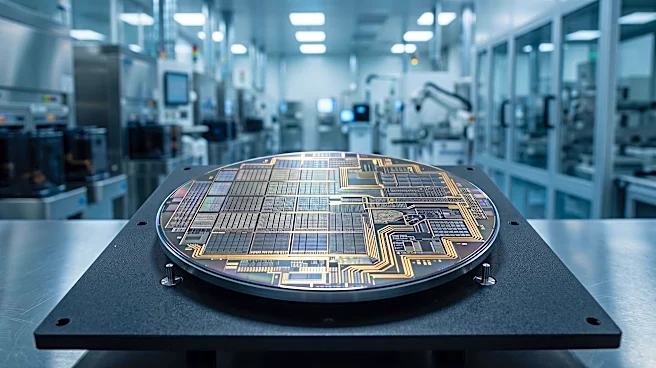
On November 19, 2026, the U.S. Department of Commerce’s Bureau of Industry and Security (BIS) implemented an interim final rule (IFR) to broaden controls on the export and reexport of U.S. semiconductor technology. This measure aims to prevent the circumvention
of existing restrictions on access to such technology through remote computing arrangements involving data centers in third countries. The IFR introduces a new worldwide end-use control on advanced Super Intelligence (SI) computing items destined for data centers that provide significant compute to companies headquartered in China, Macau, and other Country Group D:5 nations. Additionally, it establishes a license requirement for most exports, reexports, or in-country transfers of advanced SI items to Brazil, Indonesia, Malaysia, Singapore, and Thailand, identified as countries with a higher risk of diversion. The rule also modifies pathways for semiconductor fabricators and Outsourced Semiconductor Assembly and Test providers (OSATs) regarding advanced-node logic chips and formally rescinds the January 2025 AI Diffusion Rule.
Why It's Important?
This expansion of export controls signifies a significant tightening of U.S. policy to safeguard its technological leadership and national security interests. By targeting remote access to controlled computing power, BIS is addressing a critical potential loophole that could allow adversaries to bypass direct export restrictions. The inclusion of five additional countries under new licensing requirements highlights concerns about the global supply chain and the potential for diversion of advanced technologies. For U.S. companies, particularly those in the semiconductor, cloud computing, and data center industries, this rule necessitates a thorough re-evaluation of their global operations, customer mapping, and due diligence processes. The rule's emphasis on 'know-your-customer' (KYC) diligence for data centers means that operators must actively verify the ultimate end-users of their computing services, adding a layer of compliance complexity and potential liability. This move underscores the ongoing geoeconomic competition, where technological dominance is increasingly intertwined with national security.
What's Next?
The IFR was effective upon publication, but BIS is accepting public comments until January 18, 2027. Parties involved in advanced SI items and related transactions are advised to immediately assess their compliance. Data centers currently serving customers in China, Macau, or other D:5 countries with significant compute power must obtain a BIS license within 90 days (by February 17, 2027) or face future export restrictions. Exporters, reexporters, and transferors must provide detailed notifications to downstream recipients about the new requirements. Foundries and OSATs need to recheck their IC designer customers against the revised guidelines. The industry will be closely monitoring BIS for any clarifications, FAQs, or implementation guidance that may arise from the public comment period, as some aspects of the IFR contain potential ambiguities. The long-term implications could include a restructuring of global supply chains for advanced computing and a greater emphasis on regionalized technological ecosystems.
Beyond the Headlines
The U.S. action reflects a broader strategy to counter what it perceives as China's efforts to leverage global manufacturing and critical supply chains for its own technological and geopolitical advantage. China, in response to U.S. export controls, has been developing its own comprehensive system, including its Unreliable Entities List created in 2019 after Huawei's placement on America's Entity List. This tit-for-tat escalation in trade and technology restrictions risks fragmenting the global trading system, potentially leading to separate technological and industrial ecosystems. Multinational companies face the challenge of navigating two distinct regulatory systems, which could necessitate separate supply chains, technology platforms, and compliance systems, eroding the efficiencies of globalization. The ethical dimension of these controls also comes into play, as the U.S. seeks to balance economic interests with national security concerns, potentially impacting global scientific collaboration and technological advancement.