






What's Happening?
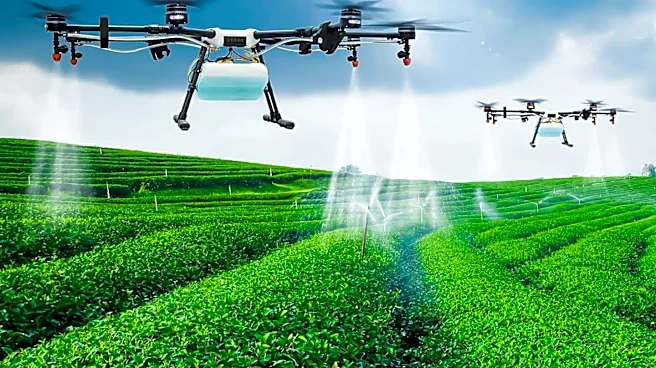
The global poultry industry is experiencing a significant growth phase, largely driven by technological advancements such as robotics, artificial intelligence (AI), and precision farming. These technologies are being increasingly adopted to enhance production
efficiency and streamline supply-chain management. According to Spherical Insights, the market was valued at approximately USD 411.02 billion in 2025 and is projected to reach USD 722.65 billion by 2035, demonstrating a Compound Annual Growth Rate (CAGR) of 5.80% during this period. The integration of AI and robotics helps producers monitor flocks, improve productivity, and make more informed operational decisions. This shift is transforming the industry from traditional livestock farming into a large-scale, technology-driven global protein business, creating opportunities across the entire value chain, including feed, breeding, hatcheries, animal-health services, equipment, processing, and logistics.
Why It's Important?
The increasing reliance on robotics and AI in the poultry industry signifies a broader trend of automation in agriculture, impacting U.S. producers by offering pathways to increased efficiency and competitiveness. For U.S. businesses, this means potential for reduced labor costs, improved animal welfare through precise monitoring, and more consistent product quality. The demand for advanced farm equipment, processing plants, and cold storage facilities will likely spur innovation and investment in related sectors. However, it also presents challenges, such as the need for significant capital investment in new technologies and the potential for job displacement in traditional farming roles. The U.S. Department of Agriculture (USDA) projects global chicken production to reach 105.8 million tonnes in 2025, indicating continued demand for productive breeding stock and hatchery capacity, which U.S. companies can capitalize on by adopting these advanced methods.
What's Next?
The poultry industry is expected to continue its evolution towards a more technology-driven model. Future developments will likely focus on further integration of AI for predictive analytics in flock management, advanced robotics for automated feeding and cleaning, and sophisticated data-driven systems for optimizing resource use. The expansion of the industry will also drive demand for specialized services in animal health, biosecurity, and sustainable production practices. Companies that invest in research and development for these areas, particularly in genetics and nutrition, are poised for significant growth. Additionally, the industry will need to address challenges such as feed price volatility, disease outbreaks, and sustainability concerns, which will further accelerate the adoption of innovative solutions to maintain efficiency and meet global demand for affordable protein.
Beyond the Headlines
The embrace of robotics and AI in poultry farming extends beyond mere economic efficiency, touching upon ethical and societal dimensions. The shift towards automated systems could lead to a re-evaluation of labor roles in rural communities, necessitating new training programs for a technologically skilled workforce. Furthermore, the enhanced precision and monitoring capabilities offered by these technologies could lead to improved animal welfare standards, as conditions can be optimized and issues detected more rapidly. However, there are also concerns about the potential for increased consolidation in the industry, as smaller farms may struggle to afford the initial investment in advanced technology. This technological transformation also raises questions about data privacy and security, as vast amounts of operational data are collected and analyzed, requiring robust frameworks to protect sensitive information and ensure responsible use.