


What's Happening?
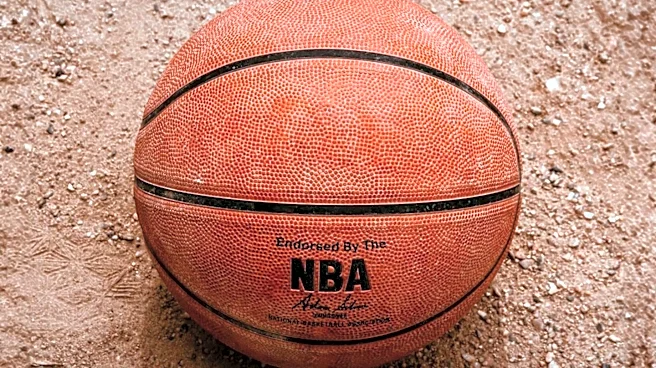
NBA Commissioner Adam Silver announced that the league is experimenting with a Bluetooth-chipped 'smart ball' for officiating, potentially for use as early as 2027. The chip, developed by Wilson, weighs approximately one gram and has undergone testing
in the NBA G League, Summer League, and select 2026 preseason games. The primary goal is to enhance officiating accuracy, particularly for out-of-bounds calls and potential goaltending or block disputes, by detecting subtle movements, spin, and trajectory changes. Silver emphasized that players testing the chipped balls did not notice any difference in handling. This initiative is part of a broader trend in sports to integrate physical equipment with embedded sensors to generate real-time data for various applications, including officiating and analytics. The league is proceeding cautiously, ensuring the technology's reliability and addressing concerns with the National Basketball Players Association regarding data usage.
Why It's Important?
The potential introduction of smart ball technology marks a significant shift in sports officiating, moving beyond traditional human observation and camera-based replays to incorporate real-time sensor data. This could lead to more accurate and consistent calls, reducing controversies that often arise from subjective interpretations of fast-paced plays. For the NBA, this innovation could enhance the integrity of the game and improve the fan experience by minimizing officiating errors. The development also positions Wilson, the NBA's official basketball manufacturer, at the forefront of sports technology, potentially opening new consumer markets for smart training equipment. However, the integration of such technology raises critical questions about data privacy, the impact on player performance evaluations, and the need for robust agreements with player unions to ensure fair and transparent data utilization. The success of this initiative could set a precedent for other sports leagues considering similar technological advancements.
What's Next?
The NBA plans to continue testing the smart ball technology, with Silver indicating that 2027 is the earliest plausible date for its use in live officiating. This timeline is contingent on further testing success and reaching an agreement with the National Basketball Players Association (NBPA) on how the collected data will be used, particularly concerning player contract negotiations. While a consumer version for shot analysis is also envisioned, it is described as several years away. The league's cautious approach suggests that any full-scale implementation will be preceded by extensive validation and stakeholder consensus. The NBA will likely expand testing into more regular-season shootarounds and non-live settings before any in-game officiating use. The outcome of negotiations with the NBPA will be crucial in determining the scope and speed of the technology's integration into professional basketball.
Beyond the Headlines
The NBA's exploration of smart ball technology extends beyond mere officiating improvements; it delves into the complex interplay between technology, human performance, and ethical considerations in professional sports. The debate over who controls and benefits from performance data generated by athletes' bodies or equipment highlights a broader societal discussion about data ownership and privacy in an increasingly connected world. The league's careful approach, including extensive testing and engagement with the players' union, reflects an understanding of the potential for backlash if these technologies are perceived as intrusive or unfair. This initiative could also influence the development of training methodologies, as players might gain access to unprecedented levels of data about their performance. The long-term implications could include a redefinition of athletic skill, where data-driven insights play a more prominent role in player development and evaluation, potentially altering the dynamics of player-team relationships and contract negotiations.