






What's Happening?
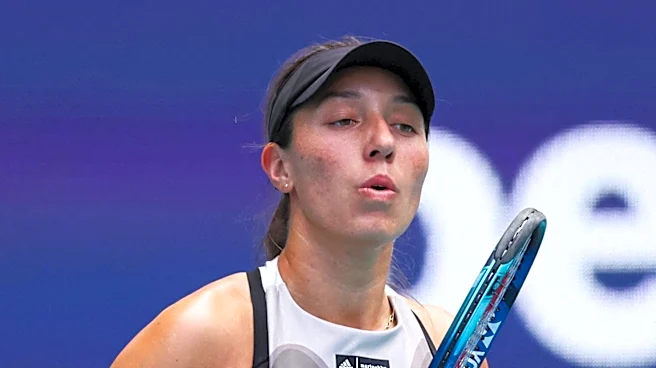
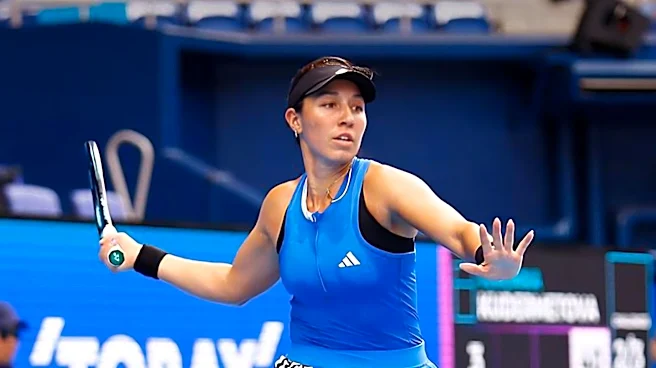
U.S. tennis player Jessica Pegula was inadvertently caught on a hot microphone during a practice session that was being livestreamed on the WTA Tour’s YouTube channel. In a private conversation with her coach, Mark Knowles, Pegula referred to Russian
tennis player Mirra Andreeva as a 'diva' who 'needs to be humbled.' Pegula also expressed a loss of respect for Andreeva's coach, Conchita Martínez, for allegedly encouraging Andreeva's behavior. According to The Athletic, Pegula was unaware that her conversation was being recorded and broadcast publicly. The WTA has since issued an apology, stating they failed to properly inform players and coaches that microphones were active during these livestreamed practice sessions. The organization has removed the recordings from YouTube and confirmed that future practice streams will not include audio of private conversations.
Why It's Important?
This incident highlights significant concerns regarding player privacy and the WTA's broadcasting practices. For athletes, the expectation of privacy, even in what they perceive as private conversations with their coaching staff, is crucial for open communication and mental well-being. The breach of this expectation can lead to distrust between players and the governing body, potentially affecting how players interact during practice sessions. The WTA's apology and subsequent actions to mute audio in future streams are an attempt to restore confidence, but the incident underscores the challenges of balancing fan access with athlete privacy in the age of pervasive media. It also brings to light the potential for personal comments, made in confidence, to become public and create interpersonal tensions among competitors.
What's Next?
Following the WTA's apology and the removal of the audio from practice streams, the immediate next step is for the organization to ensure that all players and coaches are fully aware of the recording parameters for any future broadcasts. The WTA has stated that future practice sessions will be livestreamed without audio, indicating a policy change to prevent similar incidents. Jessica Pegula has reportedly messaged Mirra Andreeva privately regarding the matter, suggesting an effort to address the situation directly. The incident may also prompt broader discussions within professional sports organizations about the extent of access granted to fans and media during training sessions, and how to best protect athletes' privacy while still providing engaging content.
Beyond the Headlines
This event touches upon the broader issue of privacy in the public eye, particularly for high-profile individuals like professional athletes. In an era where nearly every aspect of public figures' lives can be recorded and disseminated, the line between public and private is increasingly blurred. For athletes, this constant scrutiny can impact their professional relationships, mental health, and overall experience in their sport. The incident also raises ethical questions for broadcasting entities regarding their responsibility to protect individuals' privacy, even when aiming to provide 'behind-the-scenes' content. It serves as a reminder that even seemingly innocuous private conversations can have significant public repercussions when inadvertently exposed, prompting a re-evaluation of consent and transparency in media coverage.