





What's Happening?
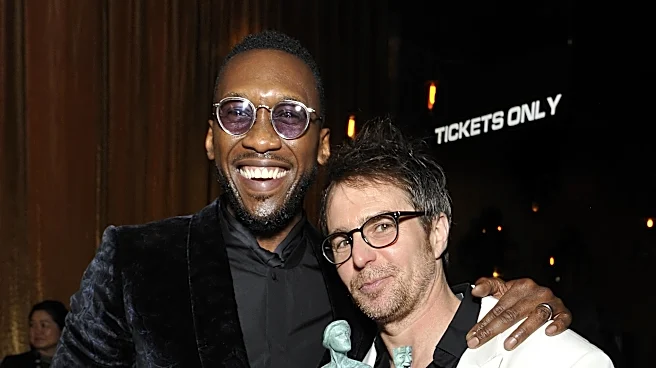
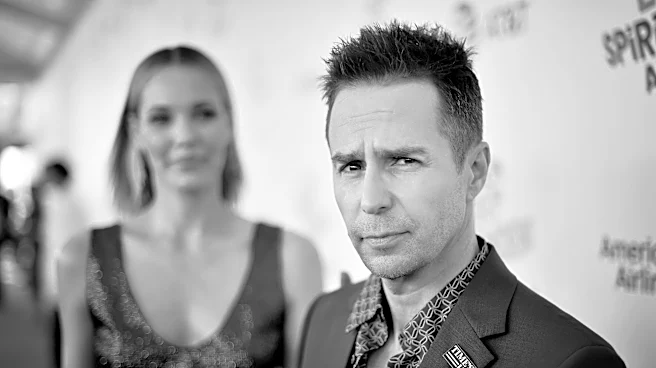
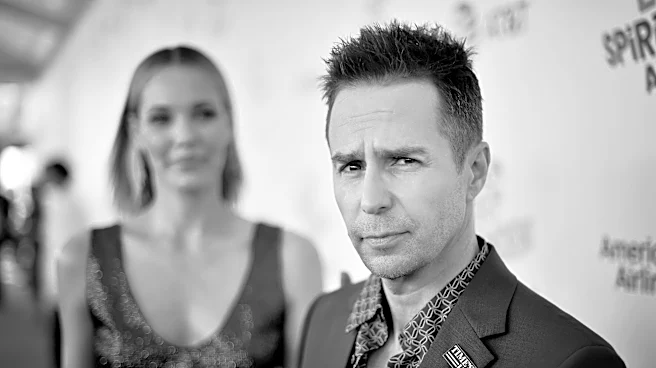
Actor Sam Rockwell has become a recurring presence in director Martin McDonagh's films, often portraying characters that embody a distinct 'American id.' Across three features, Rockwell has consistently delivered performances characterized by a blend
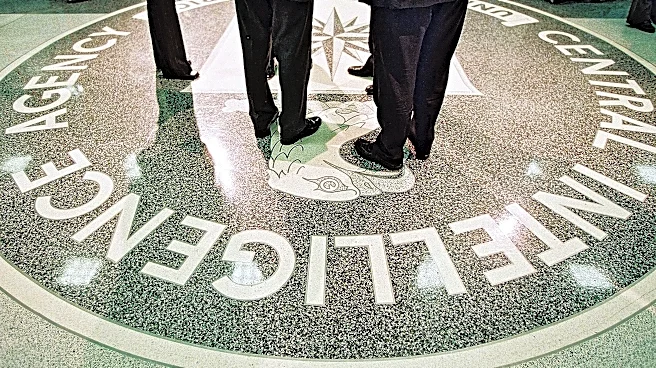
of rascally stupidity and underlying complexity. In 'Seven Psychopaths,' he plays Billy, a struggling actor and dog kidnapper whose loud, antsy, and sometimes misguided enthusiasm drives much of the plot. His character in 'Three Billboards Outside Ebbing, Missouri,' Officer Jason Dixon, is a small-town cop grappling with his own prejudices and a lack of grace, yet he is portrayed with a degree of pitiable humanity. Most recently, in 'Wild Horse Nine,' Rockwell takes on the role of Lee, a CIA operative who, despite his more restrained demeanor, still exhibits a restless energy and a commitment to his work, even when it involves morally ambiguous tasks. These roles, according to the source, allow Rockwell to subtly shift the tenor of his scene-stealing performances, often serving as a foil or a reflection of American characteristics within McDonagh's narratives.
Why It's Important?
Sam Rockwell's consistent casting in Martin McDonagh's films is significant because it highlights a particular artistic collaboration that explores and critiques American archetypes. McDonagh, a playwright and filmmaker, uses Rockwell's characters to inject a specific 'American id' into his narratives, which often feature dark humor and moral ambiguity. This collaboration offers a unique lens through which to examine societal issues, as Rockwell's portrayals of characters like the prejudiced Officer Dixon or the morally flexible CIA agent Lee can spark discussions about empathy, accountability, and the complexities of human nature within an American context. The critical reception of Rockwell's performances, including his Oscar win for 'Three Billboards,' underscores the impact these characters have on audiences and critics, prompting reflection on how such figures are perceived and understood. The dynamic between McDonagh's writing and Rockwell's acting creates a distinctive cinematic voice that contributes to broader cultural conversations about American identity and morality in contemporary film.
What's Next?
Given the established pattern of collaboration between Sam Rockwell and Martin McDonagh, it is reasonable to anticipate future projects featuring the actor in McDonagh's upcoming films. McDonagh typically releases a new feature every four to five years, suggesting that another collaboration could be several years away. These future projects would likely continue to explore complex characters and themes, with Rockwell potentially taking on new roles that further delve into the 'American id' or other societal commentaries. The ongoing success of their partnership, both critically and in terms of awards, provides a strong incentive for them to continue working together. Audiences and critics will likely be keen to see how their creative synergy evolves and what new dimensions Rockwell brings to McDonagh's distinctive storytelling.
Beyond the Headlines
The recurring collaboration between Sam Rockwell and Martin McDonagh extends beyond mere casting; it represents a deeper exploration of theatricality and allegory in film. McDonagh's background as a playwright often imbues his films with a stylized quality, and Rockwell's performances, with their inherent 'outside-yet-inside' nature, serve to highlight this. His characters, whether a red-shirt extra in 'Galaxy Quest' or a delusional game-show host, often bend the reality of the movie around them, making them ideal for McDonagh's allegorical approach. This dynamic suggests that Rockwell's characters are not necessarily meant to be direct representations of real people but rather symbolic figures through which broader societal or ethical questions are posed. The ethical implications of portraying characters like Officer Dixon, who is both prejudiced and pitiable, raise questions about how audiences are encouraged to empathize with flawed individuals and the potential for redemption or understanding in complex moral landscapes. This artistic choice challenges viewers to look beyond surface-level interpretations and engage with the deeper, often uncomfortable, truths presented in McDonagh's work.