





What's Happening?
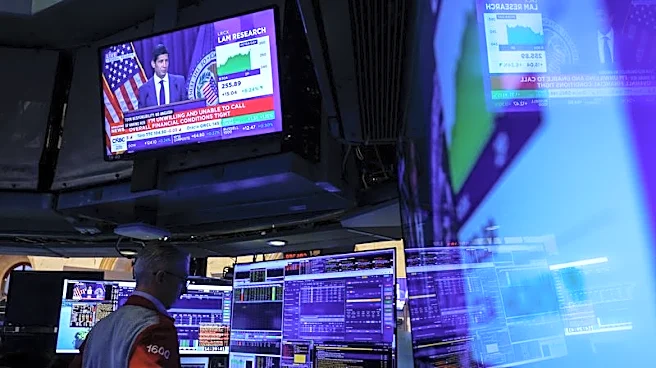
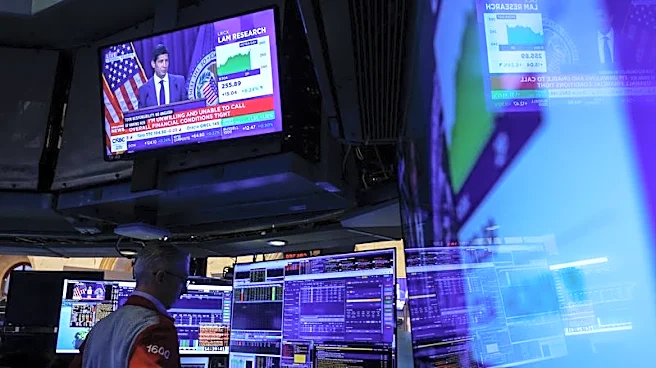
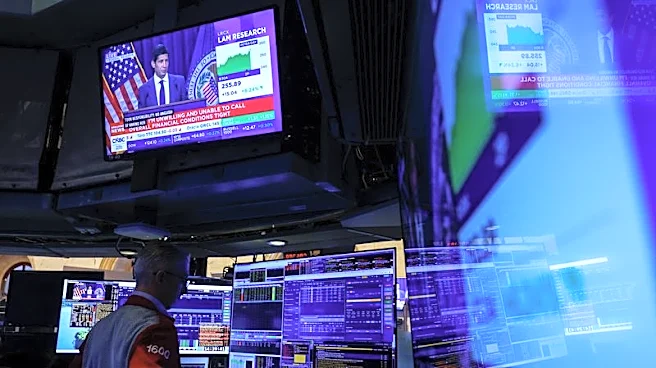
Intel's stock experienced a significant decline, plunging as much as 30%, marking its worst trading day since 1974. This sharp drop followed the company's weak revenue guidance for the current quarter, projecting $15 billion to $16 billion, which fell
short of analysts' expectations of $17 billion. The company also issued a warning that its substantial, long-term, and inherently risky investments in research and manufacturing might not yield a favorable return. High memory-chip prices are contributing to the problem by negatively impacting PC sales, a crucial segment for Intel. Analysts reacted by downgrading their outlooks, with some noting that the revenue target missed even the most pessimistic estimates. This downturn is part of a broader tech sector sell-off, fueled by concerns about the sustainability and profitability of massive investments in artificial intelligence (AI) infrastructure.
Why It's Important?
Intel's significant stock plunge and cautious outlook have substantial implications for the U.S. technology sector and the broader economy. As a major chipmaker, Intel's performance often serves as an indicator for the health of the semiconductor industry. The U.S. government, which holds a 10% stake in Intel, is also directly affected by this decline. The company's warning about the potential for unfavorable returns on its AI investments raises questions about the long-term profitability of the AI boom, a concern echoed across the tech industry. This situation could lead to increased scrutiny of AI-related expenditures and potentially a more conservative approach to investment in the sector. For consumers, the impact of high memory-chip prices on PC sales could translate to higher costs or slower innovation in personal computing devices. The broader market sentiment, as evidenced by the tech-heavy Nasdaq 100's decline, suggests a re-evaluation of tech stock valuations and the sustainability of current growth trajectories.
What's Next?
Intel does not anticipate an improvement in its PC business until at least mid-2027, suggesting a prolonged period of challenges. The company's ability to demonstrate a clear path to profitability from its AI investments will be crucial for regaining investor confidence. Analysts will closely monitor Intel's future earnings reports and strategic announcements for signs of recovery or further headwinds. The broader tech industry will likely continue to grapple with the question of whether the enormous investments in AI infrastructure will ultimately pay off. This uncertainty could lead to continued volatility in tech stocks and a more cautious investment environment. Companies may face increased pressure to show tangible returns on their AI expenditures, potentially leading to a shift in investment strategies and a focus on more immediate profitability rather than long-term speculative growth.
Beyond the Headlines
The current market reaction to Intel's performance and the broader tech sell-off highlights a fundamental tension between innovation and profitability in the age of AI. While AI promises transformative capabilities, the immense capital expenditures required to develop and deploy AI infrastructure are raising concerns about financial sustainability. This situation could trigger a 'negative feedback loop,' where gloomy market psychology impairs companies' ability to raise capital, further pressuring data center spending and slowing technological advancement. The debate over whether AI returns can justify the scale of investment is likely to intensify, potentially leading to a re-evaluation of business models and investment strategies across the tech landscape. This period of adjustment could also expose vulnerabilities in companies that have relied heavily on speculative growth rather than robust financial fundamentals, leading to a more discerning market for tech investments.