







What's Happening?
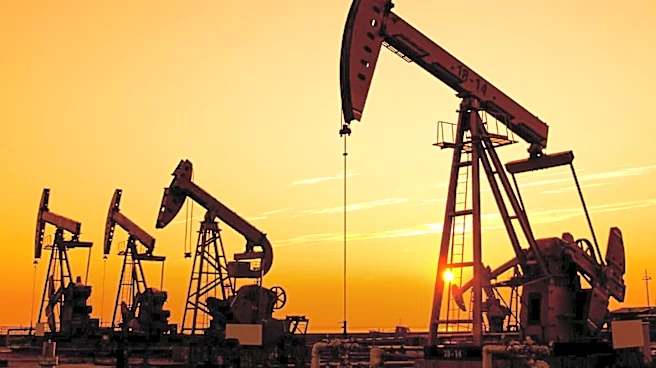
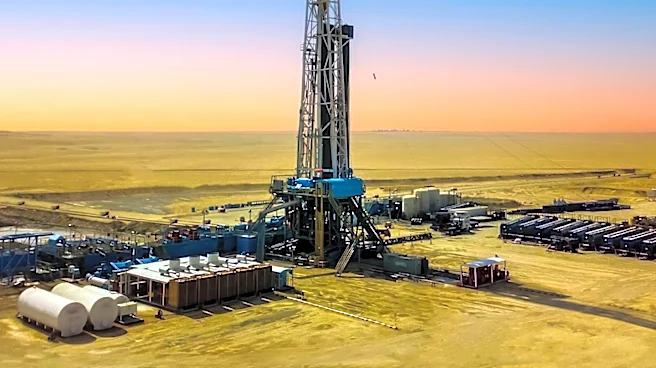
The oil market is experiencing a significant shift following a peace deal between the US and Iran, which has led to a surge in oil supply. This development comes after the reopening of the Strait of Hormuz, allowing over 60 million barrels of previously
trapped oil to enter the market. Analysts from major financial institutions like Morgan Stanley and Goldman Sachs have expressed concerns about a potential oil glut as supply outpaces demand. The situation is exacerbated by China's reduced oil imports, which have not yet rebounded to pre-war levels. The current market conditions have resulted in a contango pattern in futures trading, encouraging storage over immediate sale. Despite the increased supply, some analysts believe the market may stabilize as strategic petroleum reserve releases slow and governments potentially rebuild stockpiles.
Why It's Important?
The potential oil glut has significant implications for global economies and oil-producing nations. For the US and other major economies, the increased supply could alleviate fears of oil-led inflation spikes, providing some economic relief. However, for oil-producing countries, particularly those in OPEC, the challenge lies in managing production levels to prevent a price collapse. The situation also highlights the geopolitical dynamics in the Middle East, where the normalization of oil flows could shift power balances. Additionally, the market's response to China's purchasing behavior will be crucial, as their demand could significantly influence global oil prices.
What's Next?
The future of the oil market will depend on several factors, including the stability of the US-Iran peace deal and the actions of OPEC+ in managing production levels. If the peace deal holds, it could lead to sustained high supply levels, forcing OPEC+ to consider production cuts to stabilize prices. China's role will also be pivotal; a return to higher import levels could absorb some of the excess supply, potentially stabilizing the market. Analysts will be watching for signs of increased Chinese demand and any strategic moves by OPEC+ to address the emerging surplus.