







What's Happening?
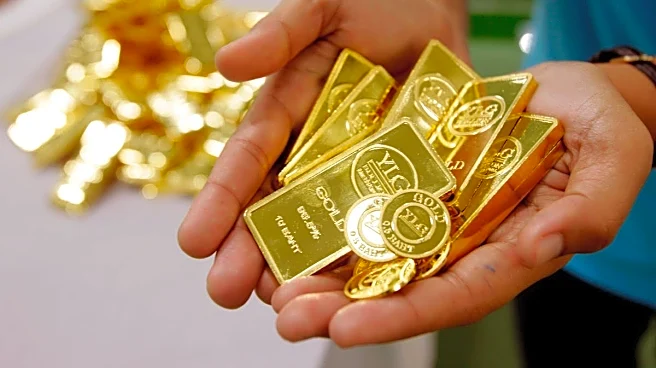
India has recently increased its import duty on gold from 6% to 15%, a move aimed at moderating gold imports and addressing the country's current account deficit. This policy change is expected to reduce India's demand for gold by 50 to 60 tonnes, approximately
a 10% year-on-year decrease. The World Gold Council (WGC) notes that this duty increase is part of a broader strategy to conserve foreign exchange reserves amid economic pressures, including the impact of the US-Iran conflict on India's oil supply. The increased duty is anticipated to affect the price of gold, which has already seen significant fluctuations this year, dropping from $5,500 per ounce to below $4,000. The WGC's mid-year outlook suggests that while the duty's impact is already reflected in current gold prices, further economic slowdown could deter Indian consumers and investors from purchasing gold, potentially increasing defaults on collateralized gold loans and boosting gold supply.
Why It's Important?
The increase in India's gold import duty is significant as it could influence global gold prices and demand. India is the second-largest market for gold, and changes in its import policies can have ripple effects across the global market. The reduction in demand from India could lead to a decrease in global gold prices, affecting investors and central banks that hold significant gold reserves. Additionally, the policy reflects broader economic challenges faced by India, including managing its current account deficit and foreign exchange reserves. The move also highlights the interconnectedness of global markets, where geopolitical events like the US-Iran conflict can have far-reaching economic impacts. For the U.S., changes in global gold prices can affect domestic markets and investment strategies, particularly for those involved in commodities trading and financial markets.
What's Next?
The future of gold prices will depend on several factors, including the global economic outlook, geopolitical developments, and central bank policies. If economic conditions worsen or geopolitical tensions rise, gold could see renewed demand as a safe-haven asset, potentially driving prices back up. Conversely, if economic growth stabilizes and interest rates rise, gold prices may face downward pressure. The WGC suggests that central banks will continue to play a crucial role in the gold market, with their purchasing patterns influencing price trends. Additionally, the response of Indian consumers and investors to the new import duty will be critical in determining the future demand for gold in one of its largest markets.
Beyond the Headlines
The increase in India's gold import duty also raises questions about the sustainability of such measures in managing economic challenges. While the duty aims to curb imports and conserve foreign exchange, it may also lead to unintended consequences, such as increased smuggling or a shift in consumer behavior towards alternative investments. Furthermore, the policy underscores the delicate balance countries must maintain between protecting domestic economic interests and participating in global trade. The situation also highlights the role of gold as a strategic asset in times of economic uncertainty, reinforcing its importance in both national and international financial systems.