








What's Happening?
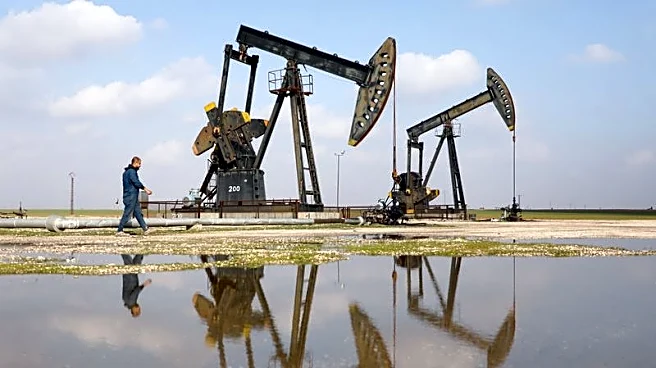
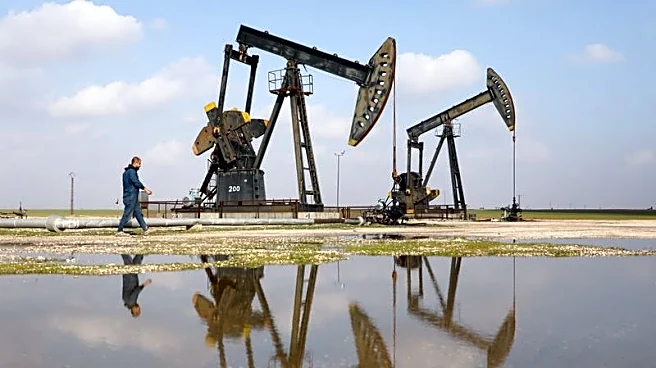
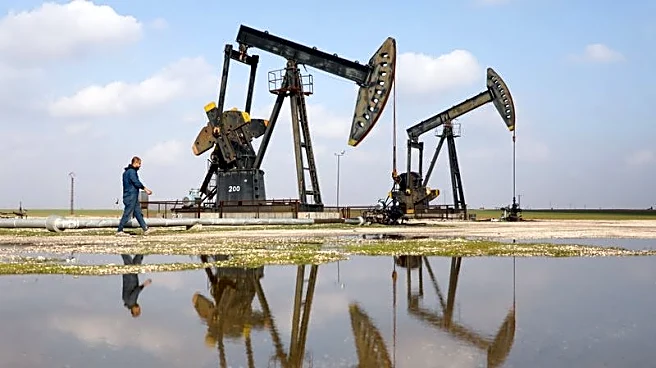
Global oil prices have surged, with Brent crude futures rising by 1.4% to $115.47 per barrel and Light crude futures climbing to $101.33 per barrel. This increase is primarily driven by heightened tensions in the Middle East, specifically reports of a missile
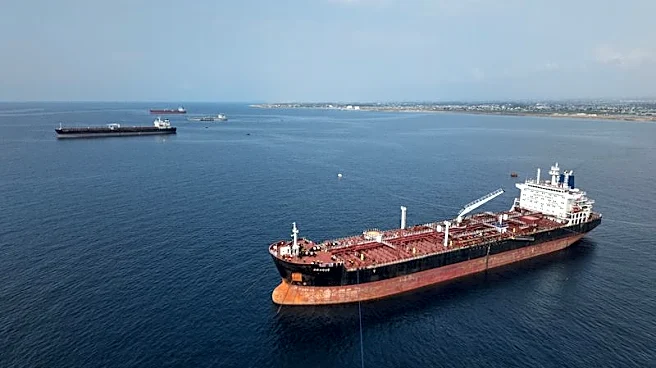
attack targeting a major oil refinery in Saudi Arabia, for which the Houthis have claimed responsibility. The U.S. Energy Information Administration (EIA) indicates that restrictions on production and export routes in the Middle East, coupled with rising tanker transportation costs and security risks, are key factors pushing prices higher. Additionally, a decline in global oil inventories, which fell by 10 million barrels in October, is making the market more vulnerable to supply disruptions. The EIA forecasts that prices could remain elevated until the uncertainty surrounding the conflict subsides and inventories are replenished.
Why It's Important?
The rise in global oil prices to $115 per barrel has significant economic ramifications worldwide. For consumers, higher oil prices translate to increased costs for gasoline, heating oil, and other petroleum-based products, leading to inflationary pressures and potentially reducing disposable income. Businesses, particularly those in transportation, manufacturing, and agriculture, will face higher operational costs, which could be passed on to consumers or impact profit margins. Oil-importing nations will experience larger trade deficits, while oil-exporting countries will see a boost in their revenues. This situation also exacerbates energy security concerns, prompting nations to seek alternative energy sources or diversify their oil suppliers. The market's vulnerability due to declining inventories means that any further supply disruptions could trigger even sharper price increases, creating economic instability.
What's Next?
The immediate future of oil prices will largely depend on the de-escalation of Middle East tensions and the replenishment of global oil inventories. The EIA predicts that prices could remain high until these conditions are met. Governments and central banks may need to consider policy responses to mitigate the inflationary impact of rising energy costs. Oil-producing nations might be pressured to increase output, although geopolitical factors and production capacities could limit such efforts. Consumers and businesses should anticipate continued volatility in energy markets. The situation could also accelerate investments in renewable energy and energy efficiency measures as a long-term strategy to reduce reliance on fossil fuels and enhance energy independence.
Beyond the Headlines
The current surge in oil prices underscores the intricate link between geopolitical stability and global economic health. The Middle East, as a critical oil-producing region, continues to exert a profound influence on international energy markets. This situation highlights the inherent risks of relying heavily on a single region for a significant portion of global energy supply. Beyond the immediate economic impact, sustained high oil prices could trigger a re-evaluation of global energy policies, potentially leading to increased strategic oil reserves, greater diversification of energy sources, and accelerated development of sustainable energy technologies. The conflict-driven price hikes also bring into focus the ethical considerations of energy consumption and the broader implications for climate change initiatives, as nations grapple with immediate energy needs versus long-term environmental goals.