


What's Happening?
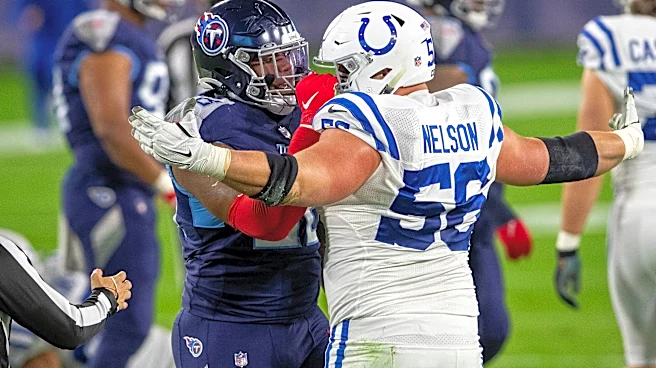
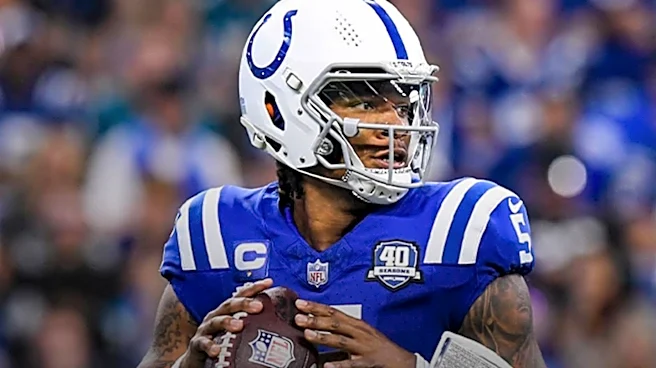
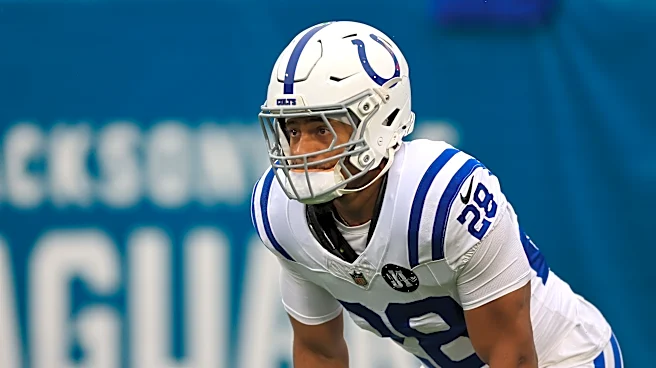
The Indianapolis Colts are currently planning to retain Daniel Jones as their starting quarterback, despite a 2-5 start to the season. This decision comes after the team traded away key players, including guard Quenton Nelson to the Seattle Seahawks and
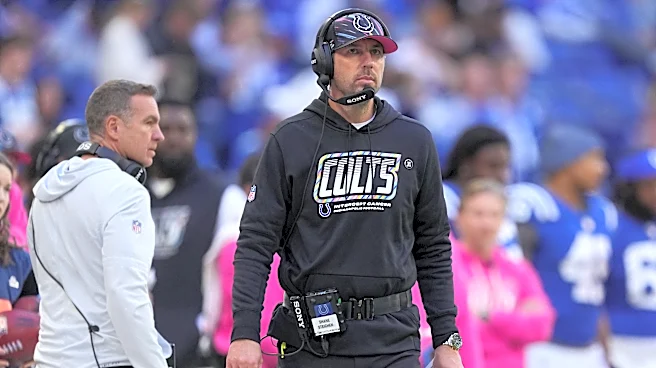
defensive lineman DeForest Buckner to the San Francisco 49ers, ahead of the trade deadline. NFL insider Tom Pelissero reported that the Colts have not discussed benching Jones. Factors influencing this decision include injuries to Jones's receiving corps and the lingering effects of an Achilles tendon tear he sustained last December. Jones, who returned to play 280 days after his injury, has completed 59.6 percent of his passes for 1,398 yards, four touchdowns, and seven interceptions in his first seven games. Head coach Shane Steichen has publicly expressed confidence in Jones, stating he has faith in the quarterback to improve.
Why It's Important?
This situation is critical for the Indianapolis Colts as it signals the team's strategic direction amidst a challenging season. Sticking with Daniel Jones, despite his performance and the team's record, suggests a commitment to his development and a belief in his potential, especially given his recent Achilles injury. The trades of prominent players like Nelson and Buckner indicate a potential rebuilding phase, making the quarterback's stability even more crucial. The financial implications of Jones's two-year, $88 million contract, particularly the $10.51 million in injury-guaranteed 2027 salary, also play a role in the team's decision-making. This scenario highlights the complex balance between player performance, injury recovery, financial commitments, and long-term team strategy in the NFL.
What's Next?
The Colts' immediate focus will be on Daniel Jones's performance in upcoming games, particularly his ability to improve and lead the team. The team's evaluation of Jones will likely continue, with the fully guaranteed portion of his 2027 salary becoming a factor if the team is eliminated from playoff contention. The presence of Anthony Richardson Sr. and Riley Leonard on the depth chart means that a quarterback change remains a possibility later in the season, especially if Jones's struggles persist. The team will also need to integrate the draft picks acquired from the recent trades into their future plans, signaling a potential shift towards developing younger talent. The remainder of the season will be a critical period for assessing Jones's long-term viability as the Colts' starting quarterback.
Beyond the Headlines
This situation extends beyond typical team dynamics, touching on the psychological aspects of athlete recovery and the pressures of professional sports contracts. Jones's return from a torn Achilles in less than a year is a testament to his resilience, but it also raises questions about the optimal timeline for such recoveries and their impact on performance. The decision to trade key veteran players while retaining a struggling quarterback can be a polarizing move, potentially affecting team chemistry and fan perception. It underscores the high-stakes nature of quarterback decisions in the NFL, where a single player's performance can significantly influence a franchise's trajectory, financial health, and fan engagement. The situation also reflects the broader trend of teams making tough roster decisions to manage salary caps and rebuild for future competitiveness.