





What's Happening?
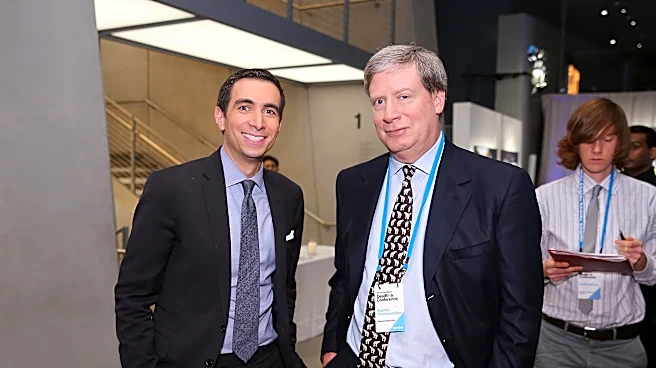
Stanley Druckenmiller's Duquesne Family Office has disclosed a new position in Space Exploration Technologies Corp. (SpaceX), acquiring 202,125 shares valued at approximately $30.49 million as of September 30. This new investment was revealed in Duquesne's
third-quarter 13F filing. Concurrently, Druckenmiller, speaking at the TomorrowX Summit in Austin, predicted a "at least 70%" chance that data centers will be operating in space within the next decade. He also discussed other significant technological advancements he foresees, including breakthroughs in genetics, immunotherapy, and artificial intelligence that could lead to cancer becoming a "managed disease" within 10 years. Despite these optimistic long-term predictions, Druckenmiller described his current investment posture as cautious, focusing on capital preservation rather than aggressive growth, citing a lack of clarity in market direction over the next 12 months.
Why It's Important?
This move by Stanley Druckenmiller, a highly respected investor, signals a potential growing confidence among institutional investors in the commercial space sector, particularly in companies like SpaceX. His substantial investment could encourage other large funds to explore opportunities in space infrastructure and related technologies. The prediction of data centers in space highlights a potential paradigm shift in how data storage and processing could evolve, offering new avenues for technological development and investment. Such a development could have profound implications for global connectivity, data security, and the operational efficiency of various industries. Furthermore, Druckenmiller's broader predictions about advancements in healthcare, particularly in cancer treatment, underscore areas of significant future innovation and potential economic impact, suggesting where future capital might flow and where societal benefits could be realized.
What's Next?
The disclosure of Duquesne's stake in SpaceX may lead to increased scrutiny and interest in the private space company's future developments, including its Starlink satellite internet service and its ambitions for space colonization. Investors will likely monitor SpaceX's progress in deploying its infrastructure and achieving its operational goals, especially concerning any potential for space-based data centers. Druckenmiller's predictions could also spur further research and development in the space technology sector, as companies and governments aim to capitalize on or prepare for such advancements. In the broader market, his cautious investment stance suggests that while long-term technological trends are promising, immediate market conditions remain uncertain, potentially influencing other investors to adopt a similar capital preservation strategy in the short term.
Beyond the Headlines
The concept of data centers in space, as predicted by Druckenmiller, extends beyond mere technological advancement; it raises significant questions about global data governance, cybersecurity in extraterrestrial environments, and the environmental impact of launching and maintaining such infrastructure. The decentralization of data storage to space could offer unprecedented resilience against terrestrial disasters and geopolitical disruptions, but it also introduces new vulnerabilities and regulatory challenges. Furthermore, the convergence of space technology with artificial intelligence and advanced medical treatments, as highlighted by Druckenmiller, points to a future where interdisciplinary innovation will drive the most transformative changes. This vision suggests a future economy deeply intertwined with advanced technology, requiring new legal frameworks, ethical considerations, and international cooperation to manage its implications.