

What's Happening?
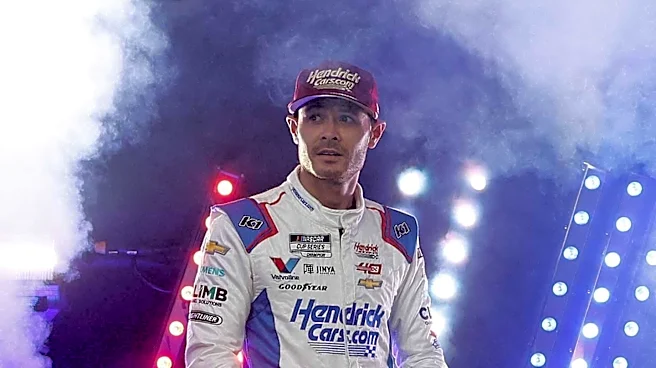
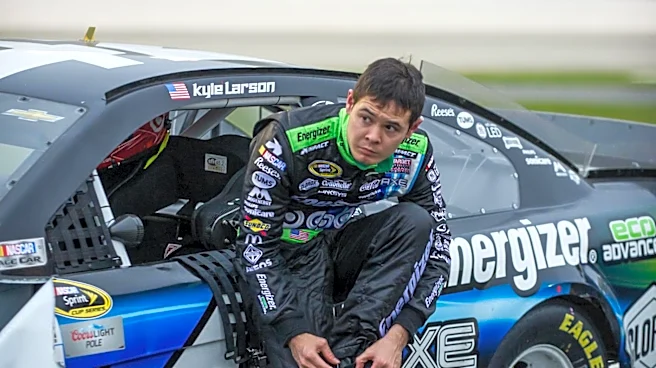
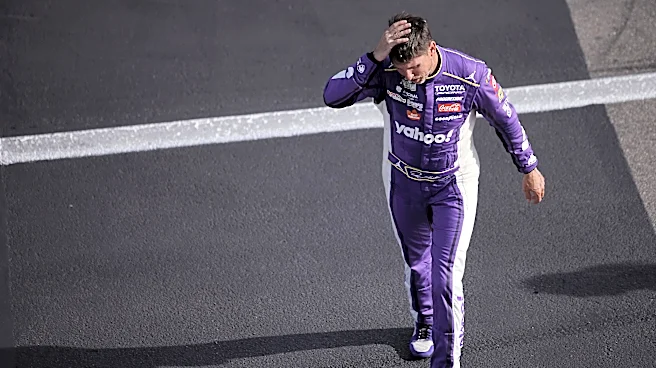
NASCAR driver Kyle Larson has secured his third Cup Series championship at the age of 34, with titles in 2021, 2025, and 2026. This achievement has sparked discussions within the racing community regarding his potential to challenge the sport's record
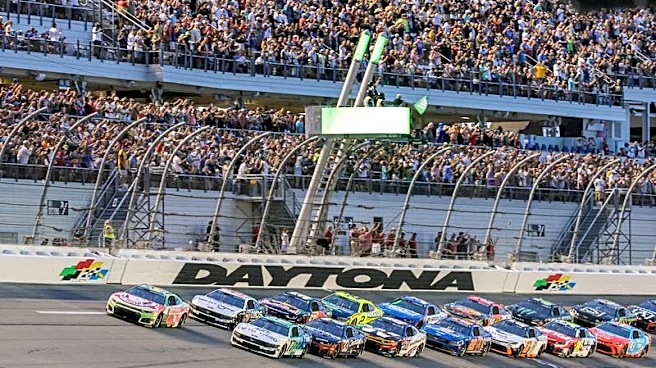
of seven titles. Fellow NASCAR driver Brennan Poole, speaking on the Power Hour Podcast, expressed confidence that Larson could reach four championships but was less certain about a fifth. Poole highlighted factors such as timing, longevity, and the strength of the competition as crucial determinants for Larson's future success. Larson's 2026 championship season was notable for a 51-race winless streak during the regular season, which he broke at Gateway in September, followed by wins at Kansas and Talladega before clinching the title at Homestead. This contrasted sharply with his dominant 10-win season in 2021, illustrating the challenges even top drivers face.
Why It's Important?
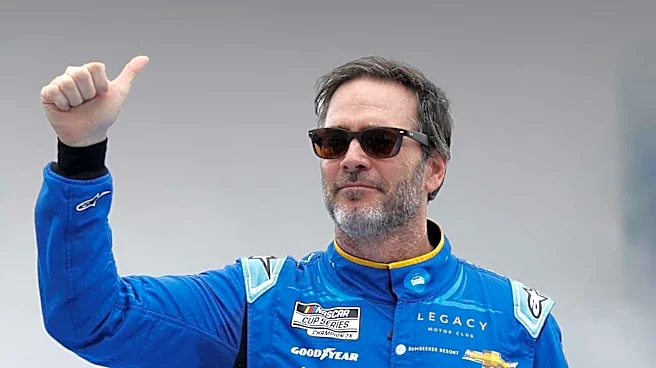
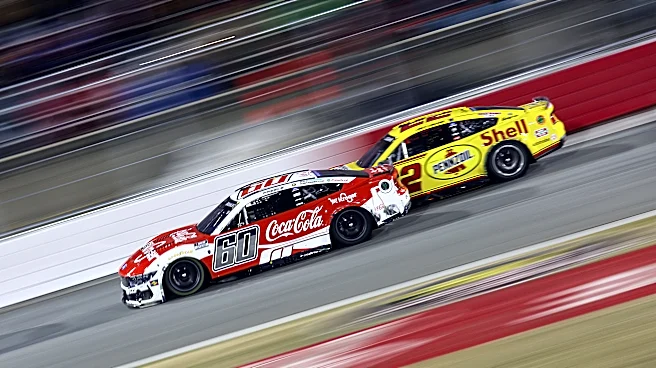
The discussion surrounding Kyle Larson's championship potential is significant for NASCAR as it touches upon the sport's historical benchmarks and the evolving competitive landscape. Achieving multiple championships solidifies a driver's legacy, drawing comparisons to legends like Richard Petty, Dale Earnhardt, and Jimmie Johnson. For Hendrick Motorsports, Larson's continued success reinforces their position as a premier team. The debate also highlights the increasing parity in NASCAR, where the performance gap between cars has narrowed significantly. This 'parity era,' as described by Poole, means that sustained dominance is harder to achieve, making each championship a more hard-fought victory. This competitive environment can enhance fan engagement by creating more unpredictable races and championship battles, potentially attracting new audiences to the sport and impacting sponsorship interest.
What's Next?
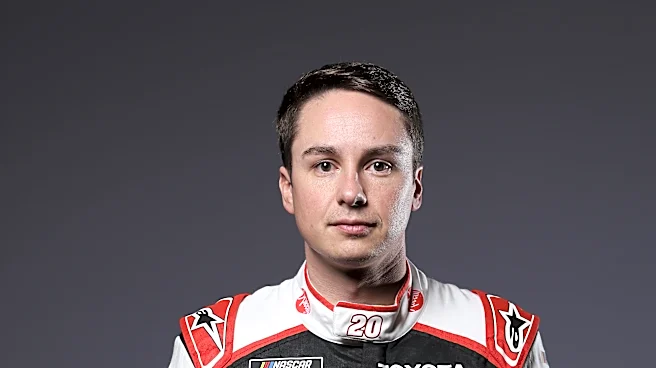
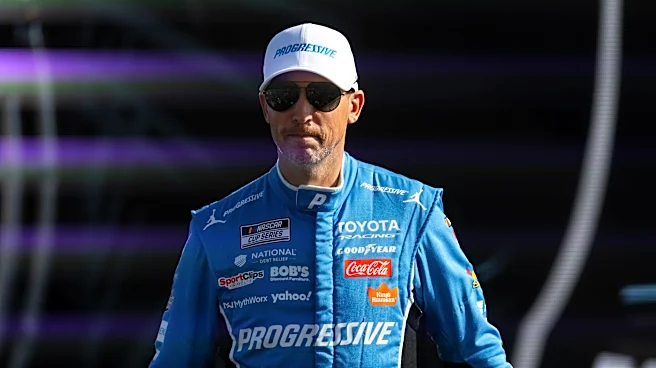
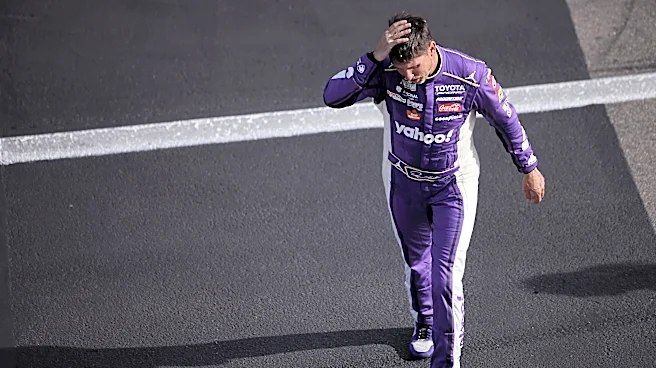
The immediate focus for Kyle Larson will be the upcoming NASCAR seasons, where he will aim to secure his fourth championship. The timeline for achieving this fourth title will be critical, as Brennan Poole suggested that a quicker fourth win could open the door for a fifth. Larson himself has acknowledged the difficulty of winning championships, stating that seven is a 'big number.' The performance of rival drivers and teams, including Ryan Blaney, Joey Logano, Denny Hamlin, and Christopher Bell, will continue to be a major factor. These competitors are expected to provide stiff opposition, making Larson's path to additional titles challenging. Denny Hamlin, however, offered a more optimistic view, suggesting that seven titles could be feasible if Larson continues racing until around age 40 and maintains his current pace of success.
Beyond the Headlines
Beyond the immediate pursuit of championships, Kyle Larson's career trajectory raises broader questions about driver longevity and the impact of evolving car technology on sustained dominance in NASCAR. The comparison with Jimmie Johnson, who reached his third championship in his seventh full-time Cup season compared to Larson's thirteenth, suggests that age alone doesn't tell the whole story; experience and adaptability play crucial roles. The 'parity era' also implies a shift in how championships are won, moving from outright dominance to strategic consistency and the ability to perform under pressure in a tightly contested field. This could lead to a more diverse set of champions over time, potentially altering the historical narrative of NASCAR's greatest drivers and emphasizing the importance of team execution and driver skill in marginal gains.