


What's Happening?
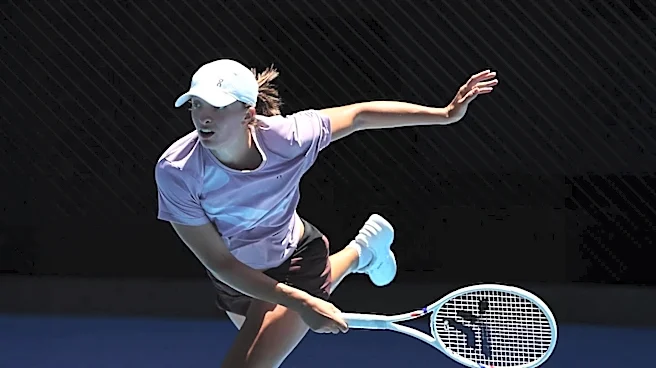
Iga Świątek, the world-renowned tennis player, has provided insight into her initial difficulties during her recent 6:3, 6:0 victory over Emiliana Arango at the WTA 1000 Cincinnati Open. Following the match, Świątek candidly explained that her early struggles
stemmed from the need to "get acquainted with the court and catch the rhythm, because it's completely different here than in Toronto." She expressed satisfaction with her patience and ability to adjust, noting that once she understood what needed improvement, the rest of the match proceeded smoothly. Świątek also acknowledged the supportive crowd in Cincinnati, appreciating their welcome and the updated appearance of the venue. Looking ahead, Świątek commented on her upcoming third-round opponent, Maria Sakkari, describing her as a "very experienced and excellent player." She anticipates a tough match, stating that she will prepare tactically and that the outcome will depend on which player performs better, given their familiarity with each other's game styles from previous encounters this season.
Why It's Important?
Iga Świątek's explanation for her initial challenges at the Cincinnati Open highlights a critical, yet often overlooked, aspect of professional tennis: the necessity for rapid adaptation to varying court conditions. For U.S. tournaments like Cincinnati, which serve as crucial lead-ups to the US Open, understanding and adjusting to court speed, bounce, and atmosphere can significantly impact a player's performance and overall tournament trajectory. Świątek's candid admission underscores the technical and mental demands placed on elite athletes, demonstrating that even top players require a period of acclimation to new environments. This insight is particularly relevant for American tennis fans, as it provides a deeper appreciation for the nuances of the sport and the intricate factors influencing player performance in their home country's major events. Her ability to overcome these initial hurdles and then dominate the match reinforces her status as a resilient and adaptable competitor, a quality essential for sustained success on the demanding WTA Tour and in Grand Slams, especially as she prepares for the final major of the year.
What's Next?
Iga Świątek's immediate next step is her highly anticipated third-round match against Maria Sakkari at the Cincinnati Open. Świątek has already indicated that she views Sakkari as a formidable opponent, emphasizing the need for thorough tactical preparation to counter Sakkari's experienced and excellent play. Given their history of playing each other this season, both athletes are familiar with each other's strengths and weaknesses, setting the stage for a strategically intense contest where execution will be key. The outcome of this match will be pivotal for Świątek's trajectory in the tournament, determining her advancement and further testing her adaptability on the Cincinnati courts against a top-tier rival. Beyond Cincinnati, this match serves as a crucial benchmark for her preparation for the US Open. A strong performance against Sakkari would significantly boost her confidence and validate her adjustments to the hardcourt season, while a challenging result could prompt further strategic refinements before the final Grand Slam of the year, influencing her approach to the major.
Beyond the Headlines
Iga Świątek's transparent comments about adapting to the Cincinnati court conditions after playing in Toronto offer a valuable glimpse into the subtle yet profound environmental factors that influence professional tennis at its highest level. The differences in court surfaces, even within the same hardcourt category, can significantly affect ball speed, bounce height, and player movement, requiring athletes to constantly recalibrate their technique, footwork, and strategic approach. This highlights the intellectual and intuitive demands of the sport, where players must act as their own analysts and adjust on the fly, often under immense pressure. Her ability to "catch the rhythm" and make in-match corrections speaks to a high level of self-awareness, mental fortitude, and problem-solving skills, which are hallmarks of elite performance. This narrative moves beyond simple win-loss records, emphasizing the continuous learning and adaptation process inherent in a global sport, where conditions vary significantly from one tournament location to another, even within the same country, demanding constant vigilance and flexibility from its stars.