


What's Happening?
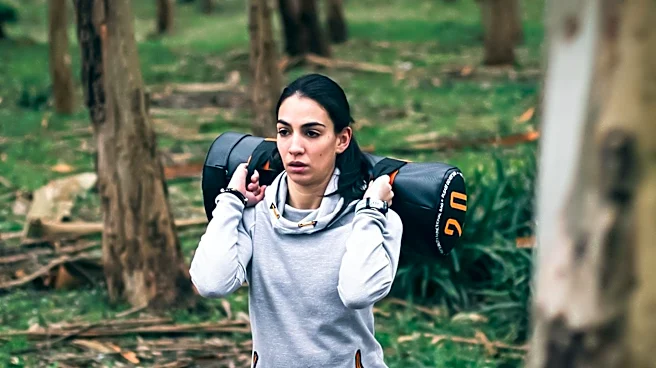
Rucking, an exercise involving walking or marching while carrying a weighted backpack or rucksack, is gaining traction as a fitness trend among civilians. This practice originated in military training, where soldiers use it to build strength, endurance,
and mental toughness, often carrying significant loads over rugged terrain. For civilians, rucking adapts these principles into weekly fitness routines, offering benefits such as increased calorie burn, enhanced cardiovascular demand, and improved skeletal and muscular loading. Beginners are typically advised to start with a weight equivalent to about 10% of their body weight, or roughly 10 to 15 pounds, and gradually increase the load. The activity is being recognized for its ability to provide resistance and bone-loading benefits that unweighted walking does not, making it particularly relevant for individuals looking to maintain muscle mass and bone density, especially women going through menopause.
Why It's Important?
The rise of rucking as a civilian fitness activity is significant for public health and the fitness industry. It offers an accessible and effective way for individuals to enhance their physical conditioning without the high impact associated with running. By increasing cardiovascular demand and loading the skeleton, rucking addresses age-related declines in muscle mass and bone density, which are critical for longevity and preventing conditions like osteoporosis. This trend provides a new avenue for fitness enthusiasts and those seeking alternative exercise methods, potentially expanding the market for weighted vests and rucksacks. Furthermore, its military origins lend it a sense of discipline and purpose, which can be motivating for participants, including veterans seeking community and purpose after service, as seen in initiatives like 'Ruck and Ride Mobile' in Alabama.
What's Next?
The growing popularity of rucking suggests a continued expansion of specialized fitness programs and events. We can anticipate more fitness centers and organizations offering rucking-focused classes or challenges, similar to 'The Art of Rucking LLC' in Killeen, Texas, which caters to individuals looking to build strength and endurance. There will likely be an increase in demand for specialized gear, such as ergonomically designed weighted vests and rucksacks, as more people adopt the practice. Additionally, community-based rucking events, often with a focus on veteran support or charitable causes, are expected to become more common, fostering social connections and promoting mental well-being alongside physical fitness. Further research into the long-term health benefits and optimal training protocols for civilian ruckers may also emerge.
Beyond the Headlines
Beyond its immediate fitness benefits, rucking taps into deeper psychological and social dimensions. Its military roots evoke themes of resilience, discipline, and camaraderie, which can resonate with individuals seeking more than just physical exercise. For veterans, rucking can serve as a therapeutic activity, offering a familiar routine and a sense of purpose that aids in post-service adjustment and mental health. The emphasis on gradual progression and starting with manageable weights also promotes a mindful approach to fitness, encouraging participants to listen to their bodies and avoid injury. This trend highlights a broader societal interest in functional fitness and activities that integrate physical challenge with mental fortitude, moving beyond conventional gym routines to embrace more holistic and purposeful forms of exercise.