



What's Happening?
Mobileye, a prominent supplier of driver assistance systems, is encountering heightened competition from companies like Nvidia and Qualcomm. This shift is driven by automakers' increasing demand for more powerful processors and sophisticated software
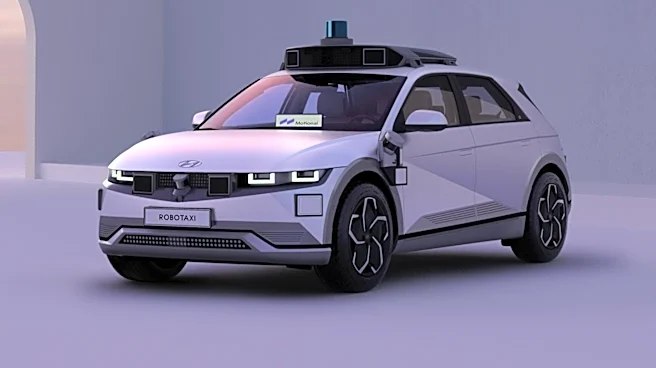
to support advanced automated driving features. While Mobileye has historically focused on technologies such as lane keeping and adaptive cruise control, which are currently used in approximately one in five cars globally, the industry is moving towards more complex systems capable of urban navigation. These advanced systems require greater computing power and additional sensors, areas where competitors may hold an advantage. Mobileye is aiming for a limited commercial rollout of its own robotaxi projects by 2027 and is also focusing on more affordable hands-free driving systems for highways, expecting these to be a significant growth opportunity. Despite a 3% increase in chip shipments in the third quarter, Mobileye's revenue decreased by 2%, indicating that increased volume does not automatically translate to higher earnings.
Why It's Important?
This evolving competitive landscape is crucial for the automotive industry and the future of autonomous driving technology in the U.S. and globally. Automakers are seeking to integrate more advanced capabilities into their vehicles, leading them to explore various technology providers. This diversification means that even established players like Mobileye, with its long-standing relationships and scale, face challenges in maintaining market dominance. The push for more sophisticated point-to-point driving systems, as seen with Stellantis working with Wayve and Qualcomm alongside Mobileye, highlights a trend where automakers are not committing to a single technology provider. This competition could accelerate the development and deployment of advanced driver assistance systems and autonomous vehicles, potentially offering consumers more choices and advanced safety features. However, it also puts pressure on companies to innovate rapidly and cost-effectively, impacting their revenue and market share.
What's Next?
Mobileye plans to launch its own robotaxi service by the end of 2027 and is collaborating with partners, including Volkswagen's MOIA unit, to deploy its autonomous technology in other operators' fleets. The company anticipates that major next-generation driver assistance programs will not reach significant volumes until 2028. Until then, Mobileye must navigate a market where automakers are actively experimenting with various technologies that could redefine industry standards. The company's strategy involves leveraging its experience in designing low-cost chips and its existing relationships with automakers to bring more affordable hands-free driving systems to the mass market. The success of these initiatives will determine Mobileye's ability to maintain its competitive edge against rivals offering more powerful processing solutions for complex urban navigation.
Beyond the Headlines
The shift in the advanced driver assistance systems market reflects a broader trend in the technology sector where specialized hardware and software capabilities are becoming increasingly critical. The move towards more powerful processors and sophisticated software for autonomous driving raises questions about data processing, cybersecurity, and the ethical implications of AI-driven decision-making in vehicles. The competition also highlights the economic pressures on technology providers to balance innovation with cost-effectiveness, especially as automakers seek to integrate advanced features without significantly increasing vehicle prices. The long-term implications could include a consolidation of technology providers or the emergence of new industry leaders, as well as a redefinition of what constitutes a 'standard' feature in new vehicles, potentially impacting consumer expectations and regulatory frameworks for autonomous driving.