






What's Happening?
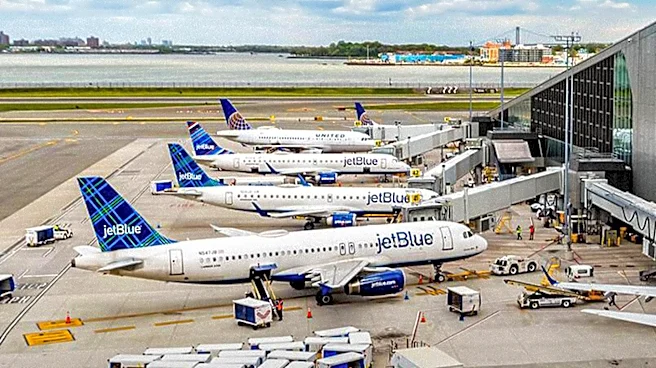
United Airlines has rejected speculation regarding a potential acquisition of JetBlue. Mike Leskinen, United Airlines' Chief Financial Officer, stated on November 19, 2026, at the Wings Club that evaluating such a deal involves more than just stock value
or network expansion benefits; it requires considering the entire business, especially accompanying financial obligations. This is not the first time United Airlines has cited JetBlue's financial situation as a factor making a merger less attractive. Meanwhile, JetBlue's CEO, Joanna Geraghty, has repeatedly dismissed bankruptcy rumors, affirming the airline's commitment to an independent recovery plan. Geraghty stated in late October that JetBlue has no plans to file for bankruptcy and is not discussing a comprehensive business restructuring program. She clarified in mid-November that meetings with creditors are routine investor exchanges, not indicators of financial reorganization. As of the end of September, JetBlue reported $2.2 billion in cash and over $7 billion in assets, pursuing a restructuring program aimed at achieving operational profitability by 2027 through improved fares and investment in premium services.
Why It's Important?
The dismissal of acquisition talks by United Airlines and JetBlue's focus on independent recovery are significant for the U.S. airline industry. For United, avoiding an acquisition of a financially challenged airline like JetBlue allows it to maintain its strategic focus on expanding its domestic and international network without inheriting substantial financial obligations. This decision reflects a cautious approach to mergers and acquisitions, prioritizing economic viability over potential network synergies. For JetBlue, successfully executing its independent turnaround plan is crucial for its long-term survival and competitiveness in a challenging market. If JetBlue can achieve operational profitability by 2027, it would demonstrate the effectiveness of its strategy and potentially alleviate concerns about its financial stability. Conversely, failure to do so could intensify pressure for consolidation or lead to more severe financial difficulties, impacting its employees, investors, and customers.
What's Next?
JetBlue is currently implementing a restructuring program with the goal of achieving operational profitability by 2027. This plan relies on improving fares and investing in premium services to boost revenue. The airline's leadership will need to demonstrate tangible progress in these areas to reassure investors and counter ongoing speculation about its financial health. While United Airlines has clearly stated its disinterest in an acquisition, the broader U.S. airline industry will continue to monitor JetBlue's performance. The possibility of consolidation remains a topic of interest for observers, especially given the pressures of rising fuel costs, significant debt burdens, and economic fluctuations affecting independent airlines. Should JetBlue's independent recovery efforts falter, strategic partnerships or acquisition discussions with other entities could re-emerge as potential options.
Beyond the Headlines
The ongoing discussions surrounding JetBlue's financial health and potential mergers highlight a broader trend in the U.S. airline industry: the increasing pressure on independent carriers to either consolidate or demonstrate robust financial resilience. The industry has seen significant consolidation over the past decades, leading to a few dominant players. For smaller airlines like JetBlue, navigating high operating costs, intense competition, and economic volatility without the scale of larger carriers is a continuous challenge. The emphasis by United Airlines on the 'entire business' and 'financial obligations' rather than just network benefits underscores a shift towards more rigorous financial scrutiny in potential mergers. This could set a precedent for future consolidation attempts, requiring acquiring companies to justify deals with clear economic advantages beyond mere market share expansion. The situation also reflects the dynamic nature of airline valuations, where past successes do not guarantee future stability, and strategic decisions must constantly adapt to evolving market conditions.