







What's Happening?
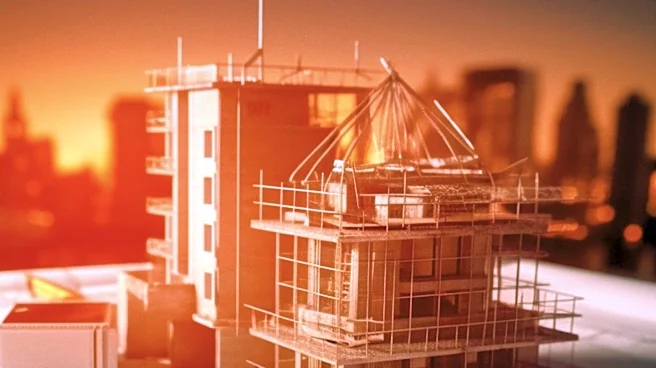
Chicago White Sox minority owner Justin Ishbia, through his firm Canal Edge LLC, has unveiled plans for a new riverfront ballpark and mixed-use development named 'The Railyards.' This proposed project is slated for a 47-acre Amtrak site along the west
bank of the Chicago River, extending from Roosevelt Road to 18th Street. The development envisions not only a new stadium for the White Sox but also commercial, residential, and healthcare spaces. The site is directly across from 'The 78,' where the Chicago Fire are currently constructing their new stadium. While renderings have been released, the actual relocation of the White Sox may not occur for some time, as Ishbia has an agreement with White Sox Chairman Jerry Reinsdorf that includes an option to purchase the team after the 2034 season. This initiative suggests a long-term vision for the team's future home and significant urban development in Chicago.
Why It's Important?
This proposed development holds significant importance for Chicago's urban landscape and economic future. The creation of 'The Railyards' could transform a large, currently underutilized industrial site into a vibrant mixed-use district, bringing new housing, businesses, and healthcare facilities to the area. For the Chicago White Sox, a new state-of-the-art ballpark could enhance fan experience, generate increased revenue, and potentially attract more visitors to the city. The project also signifies a substantial private investment in Chicago's infrastructure and real estate market, potentially creating numerous construction jobs and long-term employment opportunities. The integration of commercial and residential spaces alongside a major sports venue could foster a dynamic urban environment, drawing residents and tourists alike, and further solidifying Chicago's reputation as a major sports and cultural hub. However, the long timeline for Ishbia's option to purchase the team suggests that the realization of this vision is still many years away, creating uncertainty for current stakeholders.
What's Next?
The immediate next steps for 'The Railyards' project will likely involve further detailed planning, feasibility studies, and securing necessary approvals from city and state authorities. Given the scale of the proposed development, extensive negotiations with Amtrak, local government, and community stakeholders will be required. Public engagement and environmental impact assessments will also be crucial components of the process. For the Chicago White Sox, the current focus remains on their existing operations at Guaranteed Rate Field, as any move to a new stadium is contingent on Ishbia exercising his option to purchase the team after the 2034 season. This means that while the vision has been presented, concrete actions toward construction are unlikely in the short term. Future developments will depend on market conditions, regulatory approvals, and the long-term strategic decisions of both Justin Ishbia and Jerry Reinsdorf regarding the team's ownership and location.
Beyond the Headlines
The proposal for 'The Railyards' extends beyond a simple stadium relocation; it represents a broader trend of sports franchises anchoring large-scale urban revitalization projects. This approach aims to create self-sustaining districts that integrate entertainment, living, and working spaces, maximizing economic impact and community engagement. Such developments often face complex challenges, including financing, infrastructure demands, and potential gentrification concerns. The long-term nature of this project, tied to a future ownership change, also introduces an element of strategic foresight in sports business, where potential future assets are planned years in advance. This could set a precedent for how major sports teams approach their long-term real estate and community development strategies, emphasizing mixed-use integration over standalone venues. The success of 'The Railyards' could influence future urban planning decisions in other major U.S. cities looking to leverage sports as a catalyst for economic growth and urban renewal.