




What's Happening?
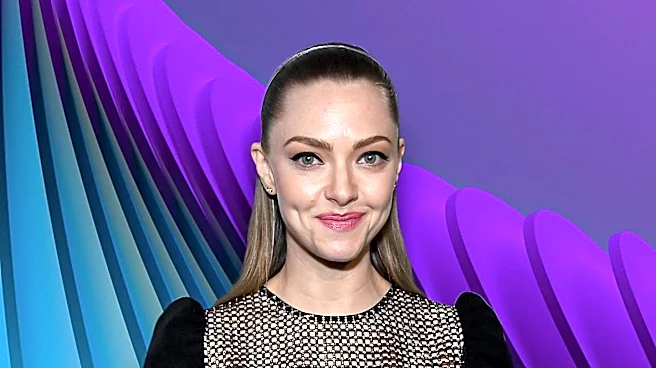
Actress Amanda Seyfried chose not to use Botox for a year during the filming of the 2025 musical drama 'The Testament of Ann Lee.' She described this decision as a 'big assignment,' emphasizing the importance of maintaining natural facial expressions
for her role. Seyfried had previously used Botox to address frowning but found that the ability to move her face freely was essential for her acting. This choice aligns with a broader discussion in Hollywood, highlighted by director Olivia Wilde, about the challenges of casting actors who can still convey emotion through natural facial movements due to widespread cosmetic procedures. Other actresses like Rachel McAdams, Carrie Coon, Carey Mulligan, and Emilia Clarke have also been noted for their commitment to natural appearances and expressive acting.
Why It's Important?
This development underscores a growing conversation within the U.S. entertainment industry regarding authenticity and the impact of cosmetic procedures on an actor's craft. For actors, the ability to convey a wide range of emotions through facial expressions is fundamental to their performance. The increasing prevalence of Botox and fillers can limit this expressiveness, potentially affecting casting decisions and the depth of character portrayal. This trend also reflects societal pressures on individuals, particularly women, in the public eye to conform to certain beauty standards. Actresses who choose to forgo such procedures, like Seyfried, are challenging these norms and advocating for a more natural approach to acting, which could influence future industry practices and audience expectations regarding on-screen appearances.
What's Next?
The ongoing discussion initiated by figures like Olivia Wilde and exemplified by Amanda Seyfried's choice may lead to increased awareness and potentially a shift in industry attitudes towards cosmetic procedures. Directors and casting agents might increasingly prioritize actors who maintain natural facial mobility, influencing actors' decisions regarding aesthetic treatments. This could also spark further dialogue about ageism and beauty standards in Hollywood, encouraging a more inclusive representation of natural aging on screen. Audiences, who have shown appreciation for actors with 'normal' and 'natural' appearances, may continue to support those who embrace authenticity, thereby reinforcing this potential shift in industry practices.
Beyond the Headlines
Beyond the immediate impact on casting and individual acting choices, this situation touches upon deeper cultural and ethical considerations within the entertainment industry. It highlights the tension between the desire for natural, expressive performances and the pervasive pressure to maintain a youthful or altered appearance. The industry's emphasis on certain aesthetic ideals can have significant psychological effects on actors, contributing to body image issues and the normalization of cosmetic interventions. Seyfried's decision, alongside others, could be seen as a quiet rebellion against these pressures, advocating for a more sustainable and authentic approach to a career that relies heavily on genuine human expression. This movement could foster a more accepting environment for diverse appearances in film and television, promoting a broader definition of beauty and talent.