







What's Happening?
IBM has announced a breakthrough in chip technology with the development of what it claims to be the world's first sub-1 nanometer chip. This new architecture allows for the integration of nearly 100 billion transistors on a chip the size of a human fingernail,
effectively doubling the transistor density compared to previous generations. The advancement is expected to significantly enhance compute performance and energy efficiency, particularly for AI data centers. Jay Gambetta, director of IBM Research, emphasized that this development is not merely an incremental improvement but a substantial leap forward in computing power without a corresponding increase in energy consumption. The technology, referred to as the 'nanostack' architecture, is built at the 0.7-nanometer node, also known as the 7 angstrom node, although these numbers do not reflect the actual physical dimensions of the chip's features.
Why It's Important?
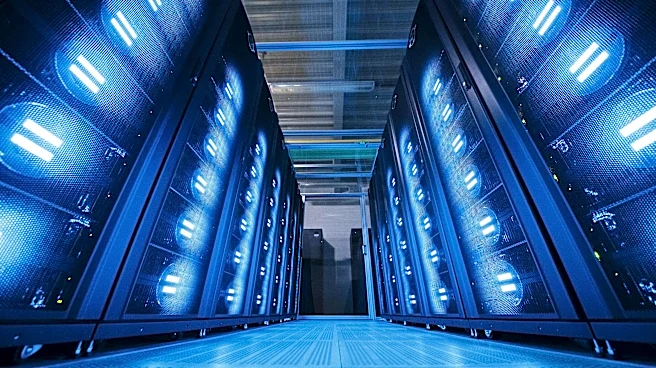
This technological advancement by IBM is poised to have a significant impact on the computing industry, particularly in the realm of AI data centers. By increasing the transistor density and improving energy efficiency, IBM's new chip technology could lead to more powerful and efficient data processing capabilities. This is crucial for the development and deployment of AI applications, which require substantial computational resources. The ability to enhance performance without increasing energy consumption is also aligned with global efforts to reduce the environmental impact of data centers. As the demand for AI and data processing continues to grow, IBM's innovation could provide a competitive edge in the tech industry, potentially influencing market dynamics and setting new standards for chip manufacturing.
What's Next?
IBM's new chip technology is expected to replace current nanosheet technology as the mainstream in leading foundries, including CPUs and GPUs, within the next decade. This transition could lead to widespread adoption of the sub-1 nanometer technology across various sectors, driving further advancements in AI and computing. Industry stakeholders, including tech companies and data center operators, will likely monitor IBM's progress closely, as the successful implementation of this technology could necessitate adjustments in their own strategies and operations. Additionally, the development may prompt competitors to accelerate their own research and development efforts to keep pace with IBM's innovation.