




What's Happening?
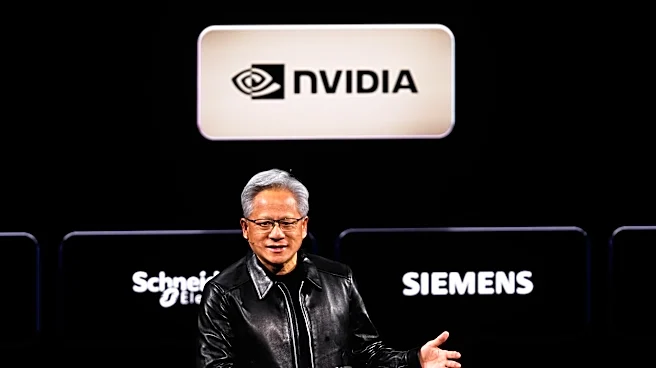
Nvidia Corp is confronting significant questions regarding its leadership succession plan, particularly concerning CEO Jensen Huang. The company's reliance on Huang, who is deeply involved in nearly every operational aspect and has numerous direct reports,
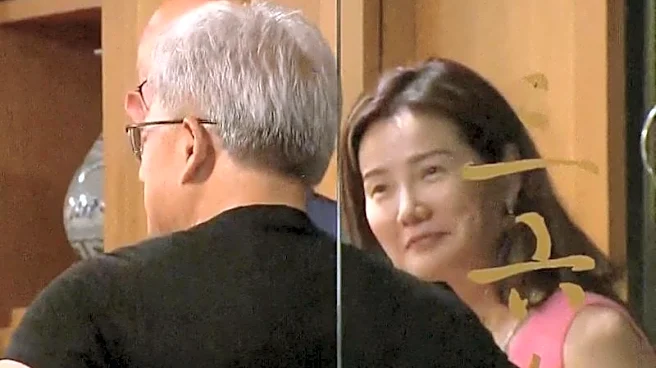
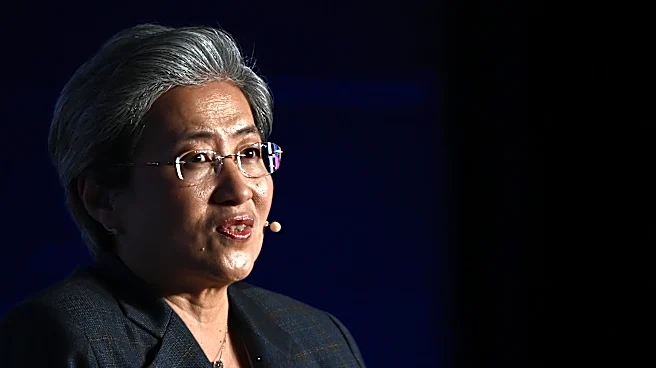
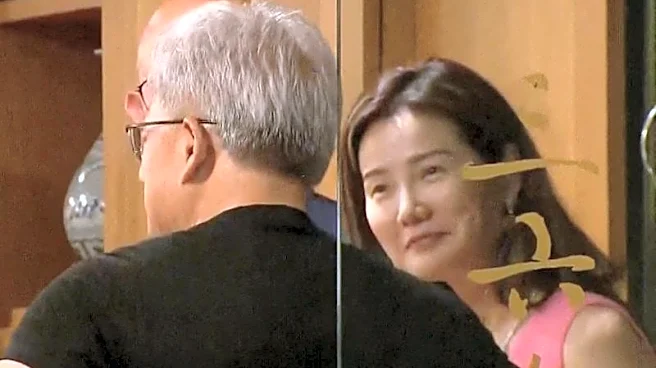
creates a complex situation. Unlike many corporations with clear leadership hierarchies, Nvidia lacks an obvious second-in-command prepared to seamlessly take over Huang's extensive responsibilities. While CFO Colette Kress is considered a potential interim replacement, she is not viewed as a permanent successor. The Information has suggested two unconventional candidates: Lisa Su, CEO of Advanced Micro Devices, Inc. (AMD), and Rene Haas, CEO of Arm Holdings plc. This succession issue arises as Nvidia faces scrutiny over allegations involving Huang and an alleged Chinese spy, which has prompted investigations by Nvidia's board, Congress, and the FBI. Huang has denied wrongdoing, stating his commitment to protecting Nvidia.
Why It's Important?
The lack of a clear succession plan at Nvidia poses a substantial corporate governance risk for investors. Jensen Huang's pervasive influence across the company's operations means that any disruption in his leadership could create significant instability. The suggestion of Lisa Su as a potential successor is particularly noteworthy, given that AMD is Nvidia's primary competitor in AI chips, making such a move an unprecedented corporate scenario. Her leadership at AMD has transformed the company into a formidable rival. Rene Haas, with his prior seven-year tenure at Nvidia, offers a more conventional, albeit still external, option. The ongoing controversy surrounding Huang further exacerbates these concerns, potentially impacting investor confidence and the company's strategic direction, even if he is ultimately cleared of any wrongdoing.
What's Next?
The immediate future for Nvidia will likely involve continued internal and external scrutiny regarding the allegations against CEO Jensen Huang. The investigations by Nvidia's board, Congress, and the FBI will proceed, and their outcomes will significantly influence Huang's standing and the company's leadership stability. Should the controversy persist or escalate, pressure on Nvidia's board to articulate a more robust succession plan could intensify. The company may need to either cultivate an internal successor or seriously consider external candidates like Lisa Su or Rene Haas, which would entail complex negotiations and potential industry realignments. Stakeholders, including investors and competitors, will closely monitor these developments for any indications of leadership changes or strategic shifts at the AI chip giant.
Beyond the Headlines
The succession dilemma at Nvidia highlights a broader challenge faced by many founder-led technology companies where the CEO's vision and operational involvement are deeply intertwined with the company's identity and success. This concentration of power, while often driving innovation, can create vulnerabilities when leadership transitions become necessary. The unconventional consideration of a rival CEO like Lisa Su underscores the scarcity of suitable internal candidates and the unique demands of leading a cutting-edge technology firm. Ethically, the ongoing investigations into Huang's conduct raise questions about corporate oversight and the potential impact of personal controversies on corporate governance. This situation could prompt other tech companies to re-evaluate their own succession planning and risk management strategies, particularly those with highly influential founders.