






What's Happening?
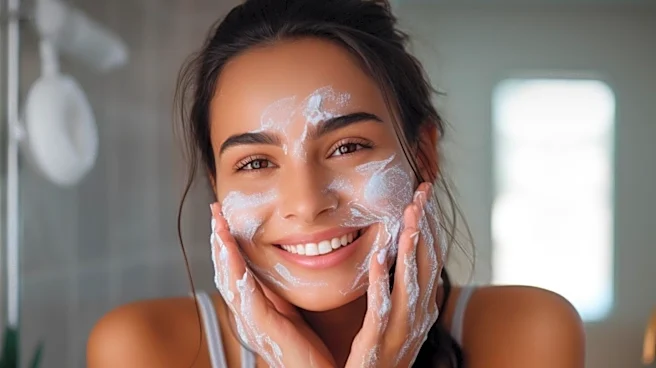
Dr. Sejal Shah, a board-certified dermatologist and founder of SmarterSkin Dermatology, advises teenagers to adopt a simple, consistent skincare routine for the back-to-school season, focusing on three core steps: cleansing, moisturizing, and sunscreen.
She cautions against complex, multi-step routines often seen on social media, which can contain harsh active ingredients unsuitable for young skin and potentially lead to adverse reactions like rashes. Dr. Shah recommends cleansing twice daily to manage increased oil production and remove accumulated dirt and sweat. Moisturizing after cleansing, especially at night, is crucial to prevent moisture loss. The final and most important step is daily sunscreen application, which she emphasizes as the best habit for preventing sun damage, skin cancer, and premature aging. Additionally, she suggests maintaining hygiene by using clean towels, pillowcases, and makeup brushes, and wiping down phones.
Why It's Important?
This guidance is crucial for U.S. teenagers and their parents, as it addresses the prevalent issue of unrealistic beauty standards and misinformation often found on social media. Many young people are exposed to complex skincare routines that can be detrimental to their developing skin, leading to irritation, allergic reactions, and a negative psychological impact due to unattainable beauty ideals. Dr. Shah's advice promotes a practical, sustainable approach that prioritizes skin health over superficial 'glow-ups.' By emphasizing consistency and basic hygiene, it helps teenagers establish healthy habits that can prevent long-term skin issues, including sun damage, which is a significant public health concern. This approach also helps families avoid unnecessary expenses on numerous products that may not be suitable or effective for teenage skin, promoting a more informed and responsible consumer behavior in the beauty market.
What's Next?
Teenagers are encouraged to consult with a dermatologist for personalized treatment options if they have specific concerns like acne or oily skin, rather than relying solely on social media trends. The focus will likely remain on educating young people about the importance of a minimalist yet effective skincare regimen. Parents and educators may play a role in reinforcing these healthy habits and managing expectations regarding beauty standards. The beauty industry might see a continued demand for gentle, effective, and age-appropriate products for younger demographics, moving away from overly aggressive formulations. There could also be a greater emphasis on promoting sun protection as a daily essential for all age groups, particularly teenagers, given its long-term health benefits.
Beyond the Headlines
This advice touches upon broader societal issues concerning the impact of social media on youth self-perception and consumer behavior. The pressure to conform to online beauty standards can lead to anxiety and unhealthy practices. Dr. Shah's recommendations implicitly advocate for media literacy and critical thinking when engaging with online content, especially regarding health and beauty. It also highlights the ethical responsibility of influencers and brands to promote realistic and safe skincare practices, particularly to vulnerable younger audiences. The emphasis on consistency and basic care over complex routines underscores a philosophy of self-care that is sustainable and rooted in well-being, rather than fleeting trends. This approach can empower teenagers to make informed choices about their health and appearance, fostering a more positive body image and self-esteem.













![Quote Of The Day By Halle Berry: '[Motherhood] Is A Constant Struggle Of...'](https://glance-mob.glance-cdn.com/public/cardpress/binge-magazine-card-generation/spaces/US/en/glam/images/xhR9Vyq7-image-178705082879427964.webp)
