
What's Happening?
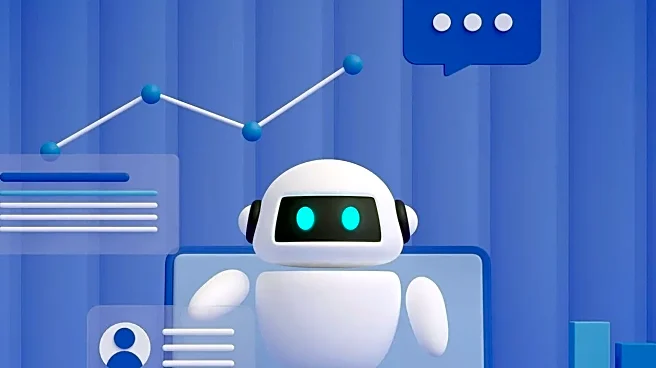
AI-powered personal assistants are increasingly being utilized to manage schedules, organize tasks, find information, and automate workflows, thereby simplifying daily work and personal responsibilities.
These tools go beyond traditional chatbots by actively completing tasks and adapting to user habits. Examples include Kimi Work, which handles end-to-end task execution across local files and web browsing; Lindy, focused on workflow automation and email management; and Google Gemini, integrated with Google Workspace for content generation and information search. Other assistants like Microsoft Copilot enhance productivity within Microsoft 365 applications, while Motion and Reclaim AI specialize in automatic task scheduling and calendar management. These AI tools aim to reduce manual effort, improve productivity, and help users focus on more critical tasks by automating repetitive or time-consuming activities.
Why It's Important?
The proliferation of AI personal assistants signifies a significant shift in how individuals and businesses approach productivity and task management. By automating routine administrative work, these tools can free up substantial time for professionals, allowing them to concentrate on strategic thinking, creativity, and complex problem-solving. This can lead to increased efficiency, reduced operational costs, and improved overall output across various industries. For individuals, these assistants offer a way to better balance work and personal life by streamlining daily chores and scheduling. The ability of these AI tools to integrate with existing applications and learn user preferences also enhances their utility, making them indispensable for those seeking to optimize their digital workflows and manage information more effectively.
What's Next?
The development of AI personal assistants is expected to continue evolving rapidly, with future iterations likely offering even more sophisticated capabilities, deeper integrations, and enhanced predictive intelligence. As these tools become more adept at understanding complex instructions and handling multi-step tasks, their adoption across various sectors is likely to grow. We can anticipate further advancements in natural language processing, allowing for more intuitive interactions, and increased personalization, where AI assistants can anticipate needs and proactively offer solutions. The market will likely see more specialized AI assistants tailored to specific industries or roles, alongside broader platforms that offer comprehensive task management. The focus will also shift towards ensuring seamless interoperability between different AI tools and platforms.
Beyond the Headlines
The widespread adoption of AI personal assistants raises several deeper implications beyond immediate productivity gains. Ethically, questions around data privacy and security become paramount as these AI tools gain access to sensitive personal and professional information. Ensuring robust safeguards and transparent data handling policies will be crucial for user trust. Furthermore, the increasing reliance on AI for task management could impact human skill sets, potentially reducing the need for certain administrative roles and shifting the demand towards skills that complement AI capabilities, such as critical thinking, creativity, and AI management. Culturally, these tools could reshape work-life balance, blurring the lines between personal and professional tasks as AI seamlessly manages both, prompting a re-evaluation of how individuals define and manage their time and responsibilities.