







What's Happening?
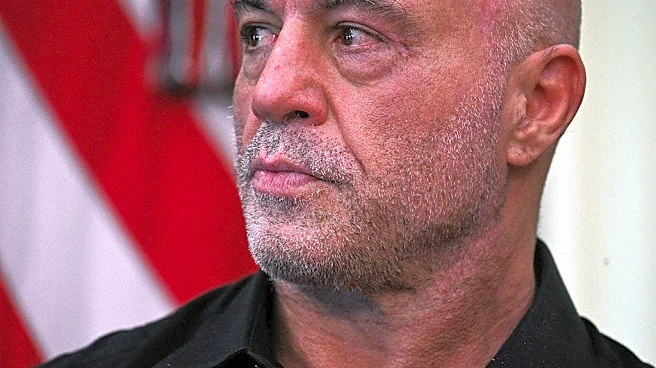
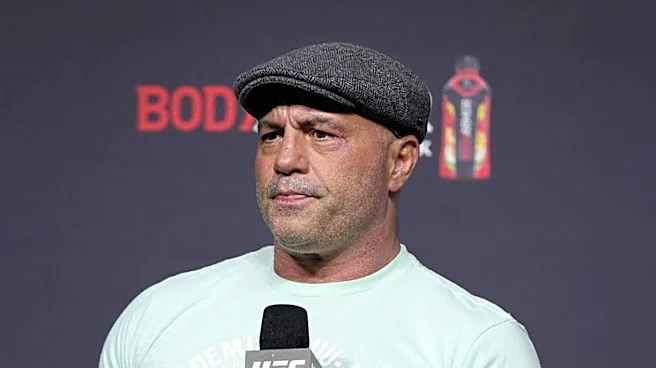
Joe Rogan, a comedian, podcaster, and UFC commentator, has drawn criticism from fans after appearing to miss a joke made by his guest, digital content creator Cody Tucker, during episode #2566 of "The Joe Rogan Experience." Tucker engaged Rogan in a discussion
about running speed and escaping dangerous situations, leading Rogan to seriously debate the hypothetical scenario. Fans on social media perceived Tucker's comments as an attempt to "rage-bait" Rogan, who remained visibly serious throughout the exchange. This incident has led some fans to question Rogan's sense of humor, with comments suggesting he is "comically insecure" and incapable of recognizing a joke, despite his background as a comedian. This is not the first time Rogan has faced such criticism, with a similar incident occurring in 2017 involving comedian Brian Regan.
Why It's Important?
This incident highlights the ongoing scrutiny surrounding Joe Rogan's podcast and his public persona, especially given his recent $250 million deal with Spotify. As one of the most influential podcasters, his interactions and reactions are closely watched by millions of listeners. Fan criticism regarding his perceived lack of humor or inability to grasp jokes can impact his image as a comedian and host. While some fans enjoyed seeing Rogan trolled, others expressed disappointment, suggesting a potential disconnect between Rogan's self-perception as a comedian and his audience's perception. Such moments, whether intentional or not, often generate significant online discussion, contributing to the podcast's virality and maintaining its relevance in the competitive media landscape.
What's Next?
It remains to be seen whether Joe Rogan will address the fan backlash or the incident with Cody Tucker in future episodes of "The Joe Rogan Experience." Given the podcast's format, Rogan often engages with listener feedback, though he may choose to ignore the criticism. The incident could become a talking point in future discussions about comedy, online trolling, or the dynamics between hosts and guests. Such viral moments, even if critical, often contribute to the podcast's overall visibility and listener engagement, potentially drawing in new listeners curious about the controversy. The ongoing fan reactions will likely continue to fuel online discussions across social media platforms.
Beyond the Headlines
This event touches upon broader themes of authenticity and performance in digital media. In an era where content creators often engage in "rage-baiting" or provocative interactions for engagement, the line between genuine conversation and staged performance can become blurred. For a figure like Joe Rogan, who has built a brand on candid and often unscripted discussions, moments where he appears to miss social cues or jokes can challenge the perception of his authenticity. It also raises questions about the audience's role in interpreting and reacting to such interactions, often leading to a collective online judgment that shapes public opinion about media personalities. The incident underscores the constant pressure on high-profile podcasters to maintain a specific persona while navigating complex social dynamics on air.