





What's Happening?
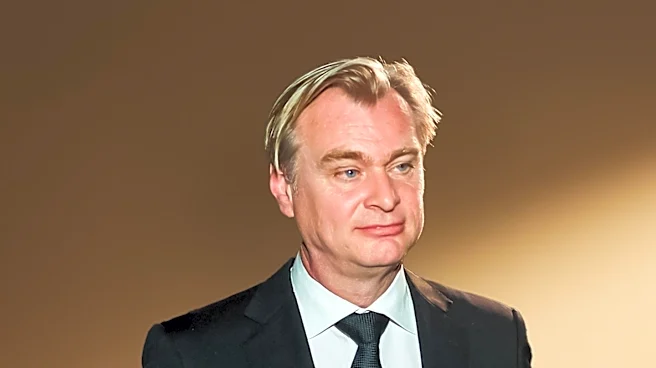
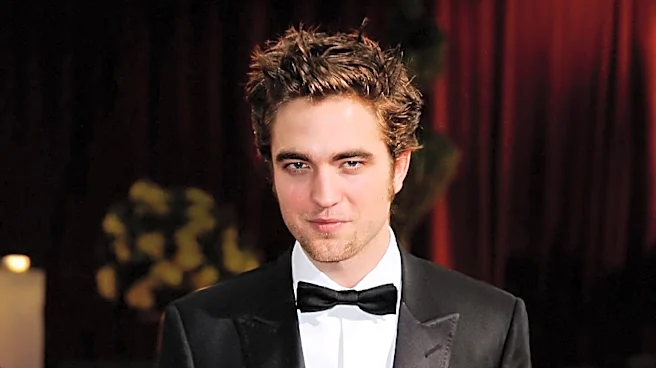
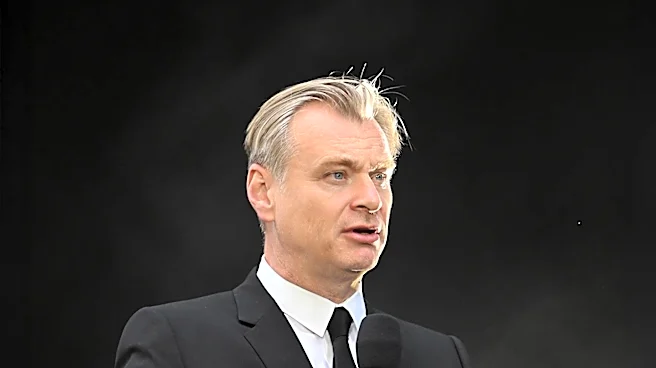
Christopher Nolan, the acclaimed director known for films like 'Oppenheimer' and 'The Dark Knight', has expressed skepticism about the role of artificial intelligence (AI) in creative industries. As he promotes his latest film, 'The Odyssey', Nolan argues
that while AI has been embraced by Wall Street and tech companies, it is largely rejected by the public, particularly in creative fields such as music, cinema, and art. He refers to the term 'AI slop' to describe the influx of AI-generated content that has flooded social media. Nolan believes that AI cannot replace human creativity and emphasizes the importance of responsibility among employers and producers in the use of AI. His comments come in the context of ongoing debates about AI's potential to replace roles traditionally held by actors, writers, and camera operators, a concern that contributed to a major strike in Hollywood in 2023.
Why It's Important?
Nolan's remarks highlight a significant tension between technological advancement and creative integrity. As AI continues to evolve, its potential to disrupt traditional creative processes poses both opportunities and challenges. For the film industry, AI's ability to generate content could lead to cost savings and efficiency, but it also raises ethical questions about the value of human artistry and the potential loss of jobs. Nolan's stance underscores a broader societal debate about the balance between embracing technological innovation and preserving human-centric creative processes. This discussion is particularly relevant as industries grapple with the implications of AI on employment and the authenticity of creative works.
What's Next?
As 'The Odyssey' hits theaters, the conversation around AI's role in the film industry is likely to intensify. Stakeholders, including filmmakers, actors, and industry leaders, may need to engage in dialogue about establishing guidelines and ethical standards for AI use in creative processes. The industry's response to AI could influence future labor negotiations and shape the trajectory of technological integration in filmmaking. Additionally, public reception of AI-generated content will play a crucial role in determining the extent to which AI is adopted in creative fields.