







What's Happening?
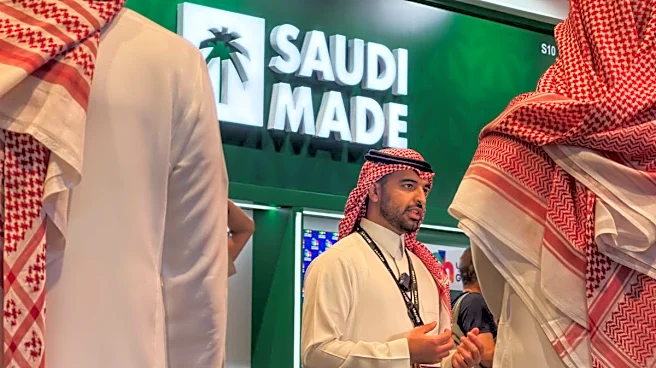
Environmental technology firm Veolia has announced collaborations with three Saudi Arabian companies to enhance water quality, manage waste, and advance decarbonization efforts. Veolia signed three Memorandums of Understanding (MoUs) with Acwa, a privately
held water desalination firm; Ma’aden, a mining company; and Khazeen, an LPG storage specialist and subsidiary of GASCO. These partnerships align with Saudi Vision 2030, a national initiative focused on water preservation, decarbonization, and circular economy actions. Veolia CEO Estelle Brachlianoff stated that these agreements aim to turn environmental challenges into concrete solutions, leveraging Veolia's technologies and expertise. The collaboration with Acwa will focus on improving seawater desalination plant design, energy efficiency, and water quality. With Ma’aden, Veolia will aid in water cycle and industrial waste management, emphasizing treatment and reuse. For Khazeen, the focus will be on deploying environmental technologies for industrial water treatment and hazardous waste management to support decarbonization.
Why It's Important?
This collaboration is significant for Saudi Arabia's long-term economic and environmental sustainability, directly supporting its Vision 2030 goals to diversify its economy away from oil and address critical environmental challenges. For the U.S., these developments highlight the growing global market for environmental technologies and sustainable solutions, potentially opening avenues for U.S. companies in similar sectors. Saudi Arabia's reliance on desalination due to limited freshwater access makes advancements in water treatment crucial, and Veolia's involvement could set new standards for efficiency and sustainability in the region. The focus on decarbonization and waste management also reflects a global shift towards greener industrial practices, which can influence international environmental policies and technological innovation. Success in these projects could demonstrate viable models for other water-stressed or industrializing nations, impacting global environmental strategies and fostering international cooperation on climate and resource management.
What's Next?
Following the signing of these MoUs, the next phase will involve detailed planning and implementation of specific projects under each agreement. Veolia and its Saudi partners will likely establish joint working groups to develop technical specifications, timelines, and resource allocation for improving desalination processes, managing industrial waste, and deploying decarbonization technologies. Progress on these initiatives will be closely monitored as key indicators of Saudi Arabia's commitment to its Vision 2030 environmental objectives. The success of these projects could lead to further investments in environmental infrastructure within the kingdom and potentially serve as a model for other Gulf Cooperation Council (GCC) countries facing similar environmental challenges. Additionally, these collaborations may foster technological advancements that could be adopted globally, influencing future trends in water management and sustainable industrial practices.
Beyond the Headlines
The partnership between Veolia and Saudi firms extends beyond immediate environmental benefits, touching upon broader themes of economic diversification and technological transfer. Saudi Arabia's push to reduce its economic reliance on oil, as outlined in Vision 2030, necessitates significant investment in non-oil sectors, including advanced environmental services. This collaboration signifies a strategic move to build local expertise and infrastructure in sustainable technologies, potentially creating new industries and job opportunities within the kingdom. Ethically, the initiative addresses the critical need for responsible resource management in a region facing severe water scarcity and the environmental impact of industrialization. It also highlights the role of international corporations in supporting national development goals, raising questions about the balance between commercial interests and sustainable development objectives in emerging economies. The long-term impact could be a transformation of Saudi Arabia's industrial landscape into a more environmentally conscious and diversified economy.