


What's Happening?
MoMoGoGo, a new all-you-can-eat sushi, sashimi, and nigiri restaurant, has opened its doors in Penrose Square at 2501 9th Road S. The establishment aims to offer a dining experience deeply inspired by Japanese culture, featuring interior designs such
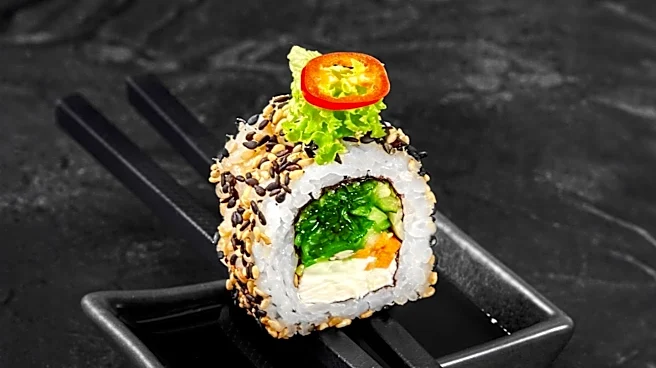
as booths resembling Japanese gazebos, faux maple leaves, and screens displaying scenes from Japan. Co-owner Heikwan Cheng emphasized that the goal is to provide an immersive environment where patrons can relax and socialize, feeling as though they are in Japan. The menu includes a variety of rolls, such as the crunch roll, ultimate roll with fried shrimp and crab, and the Jimmy Smith roll with deep-fried smoked salmon. Nigiri options range from red snapper and yellowtail to smoked salmon and cooked shrimp. MoMoGoGo offers all-you-can-eat pricing at $36.95 for dinner and $25 for lunch, with a 90-minute time limit. Cheng, who also owns Uzu Revolving Sushi in Rockville, Md., and Churasuko Japanese Brazilian Steakhouse in Tysons, stated a commitment to high-quality food, service, and environment, hiring sushi chefs from traditional sushi places to ensure quality.
Why It's Important?
The opening of MoMoGoGo in Penrose Square signifies a growing trend in the U.S. dining landscape towards experiential and value-driven restaurant concepts, particularly within the Asian cuisine sector. For the local economy, this new establishment creates jobs and adds to the vibrancy of Penrose Square, potentially drawing more foot traffic and supporting other local businesses. The emphasis on an authentic Japanese ambiance, combined with an all-you-can-eat model, caters to a consumer base seeking both cultural immersion and perceived value, which could influence other restaurateurs to adopt similar strategies. Furthermore, the commitment to sourcing high-quality fish and hiring experienced chefs, as highlighted by co-owner Heikwan Cheng, suggests a competitive drive to elevate the standard of all-you-can-eat dining, challenging the perception that such models compromise on quality. This could lead to increased competition and innovation within the sushi restaurant market, benefiting consumers with better food and dining experiences.
What's Next?
MoMoGoGo plans to expand its offerings beyond sushi, sashimi, and nigiri. Future additions to the menu will include a lunch platter featuring ramen, curry chicken, and various rice dishes. The restaurant also intends to introduce a takeout menu, which will offer combination platters of rolls and other items, catering to customers who prefer to dine at home. These expansions indicate a strategy to diversify revenue streams and appeal to a broader customer base. The success of MoMoGoGo's model, particularly its blend of authentic ambiance and all-you-can-eat pricing, will likely be closely watched by other restaurant groups. If successful, it could inspire similar ventures in other U.S. cities, further popularizing experiential dining concepts and potentially influencing the competitive landscape of the casual dining sector. The restaurant's ability to maintain high quality while managing the demands of an all-you-can-eat format will be crucial for its long-term success and reputation.
Beyond the Headlines
The opening of MoMoGoGo reflects a deeper cultural integration and appreciation for global cuisines within the U.S. The restaurant's dedication to creating an immersive Japanese environment goes beyond just serving food; it offers a cultural experience that can broaden diners' understanding and appreciation of Japan. This trend of 'experiential dining' is becoming increasingly significant, as consumers seek more than just a meal, desiring entertainment, atmosphere, and a sense of escape. Ethically, the restaurant's commitment to high-quality ingredients and skilled chefs in an all-you-can-eat setting could set a new standard, potentially pushing other establishments to re-evaluate their sourcing and staffing practices. This could lead to a positive ripple effect on labor standards and ingredient quality across the industry. Moreover, the 90-minute time limit on all-you-can-eat options highlights a practical approach to managing costs and food waste, a growing concern in the restaurant industry, while still providing value to customers.